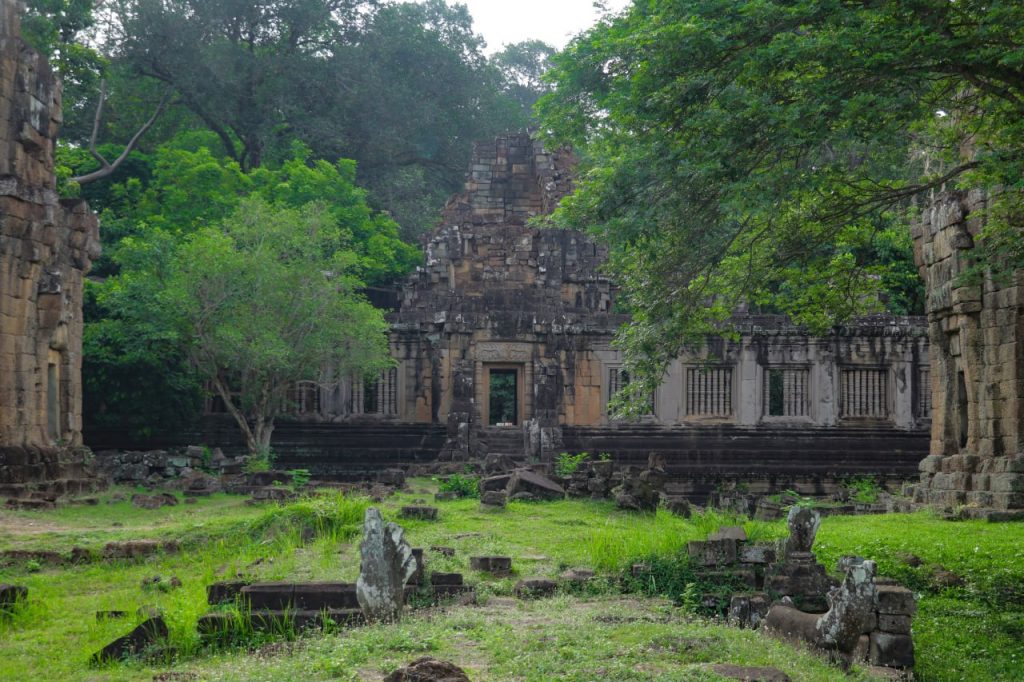
ស្ថិតនៅពីក្រោយប្រាសាទសួរព្រ័ត និងនៅប៉ែកខាងកើតនៃព្រះបរមរាជវាំង ប្រាសាទឃ្លាំង គឺជាសំណង់ថ្មភក់ភ្លោះដ៏ស្វាហាប់ ដែលឈរអមសងខាងផ្លូវឆ្ពោះទៅកាន់ទ្វារជ័យនៃក្រុងអង្គរធំ។ ប្រាសាទដ៏វិចិត្រទាំងពីរនេះ មានរូបរាងស្ទើរតែដូចគ្នាទាំងស្រុង បើទោះបីជាត្រូវបានកសាងឡើងក្នុងរជ្ជកាលខុសគ្នាក៏ដោយ៖
ប្រាសាទឃ្លាំងខាងជើង កសាងឡើងនៅចុងសតវត្សរ៍ទី១០ ដោយព្រះបាទជ័យវម៌ទី៥ ដែលដំបូងឡើយបានផ្តួចផ្តើមសាងក្នុងរាជ្យព្រះបាទរាជេន្ទ្រវម៌ទី២។ សំណង់នេះ ប្រហែលមានប្រក់ដំបូលធ្វើអំពីឈើ ប៉ុន្តែក្រោយមកត្រូវបានរុះរើ និងសាងសង់ជំនួសដោយថ្មភក់វិញយ៉ាងរឹងមាំ។
ប្រាសាទឃ្លាំងខាងត្បូង កសាងនៅដើមសតវត្សរ៍ទី១១ ដោយព្រះបាទសូរ្យវម៌ទី១ ដែលមានរូបរាងដូចទៅនឹងឃ្លាំងជើងដែរ ប៉ុន្តែមានទំហំតូចជាងបន្តិច។
គួររម្លឹកថា សំណង់ទាំងពីរនេះគឺជាដើមកំណើតនៃរចនាបថសិល្បៈសម័យអង្គរដ៏ល្បីល្បាញ គឺ “រចនាបថឃ្លាំង” ដែលមានឥទ្ធិពលទៅដល់ប្រាសាទល្បីៗផ្សេងទៀត ដូចជាប្រាសាទភិមានអាកាស និងប្រាសាទតាកែវ ជាដើម។
ក្រៅពីតម្លៃផ្នែកស្ថាបត្យកម្ម ប្រាសាទឃ្លាំងមិនមែនគ្រាន់តែជាសំណង់សាសនាធម្មតានោះទេ ប៉ុន្តែវាជា “បណ្ណសារដ្ឋានរដ្ឋបាល” ដ៏សំខាន់បំផុតមួយក្នុងសម័យអង្គរ តាមរយៈភស្តុតាងប្រវត្តិសាស្ត្រដែលបានចារឹកទុកនៅលើជញ្ជាំងថ្ម។ ទី១ គឺផែនទីដីធ្លីចារលើថ្ម (ប្រាសាទឃ្លាំងខាងជើង) នៅលើមេបង្អួចមួយ។ ជា “ផែនទីដីធ្លី” ឬប្លង់កម្មសិទ្ធិដីធ្លីបុរាណ ដែលមានអាយុកាលជាង១០០០ឆ្នាំ។ នេះជាភស្តុតាងដ៏កម្រ និងមានតម្លៃមហាសាល ដែលបង្ហាញថា ចក្រភពខ្មែរសម័យនោះ មានប្រព័ន្ធគ្រប់គ្រង ចុះបញ្ជី និងបែងចែកកម្មសិទ្ធិដីធ្លីរបស់រដ្ឋ និងប្រជារាស្ត្រយ៉ាងច្បាស់លាស់ និងមានលក្ខណៈវិទ្យាសាស្ត្ររួចទៅហើយ។
ទី២ ជាសិលាចារឹកពាក្យសម្បថនៃក្រុមតម្រួត (K. 292) ដែលបានចារនៅលើមេទ្វារនៃប្រាសាទឃ្លាំងខាងត្បូង។ គឺជាពាក្យសម្បថរបស់ក្រុមអ្នកកាន់កាប់កិច្ចការរដ្ឋបាល ឬមន្ត្រីរាជការក្នុងសាមន្តរាជ) ចំនួន ៤០០នាក់ មកពីបណ្តាតំបន់ចំណុះនានាជុំវិញចក្រភព។ ខ្លឹមសារសំខាន់នៃពាក្យសម្បថនោះ មានសេចក្តីថា «ក្រុមមន្ត្រីទាំងអស់ត្រូវស្បថថ្វាយជីវិត ចំពោះមុខព្រះភក្ត្ររបស់ ព្រះបាទសូរ្យវម៌ទី១ ដោយសន្យាថានឹងស្មោះត្រង់ ការពារព្រះមហាក្សត្រ ការពារទឹកដី មិនក្បត់រាជបល្ល័ង្ក និងបំពេញការងាររដ្ឋបាលដោយយុត្តិធម៌។ ប្រសិនបើជនណាក្បត់ ពាក្យសម្បថនោះនឹងធ្លាក់នរក ប៉ុន្តែបើស្មោះត្រង់នឹងទទួលបានបុណ្យកុសល និងការលើកតម្កើង ជាដើម»។
ភស្តុតាងទាំងផែនទីដីធ្លី និងសិលាចារឹកពាក្យសម្បថនៅប្រាសាទឃ្លាំង បានផ្តល់ព័ត៌មាន យ៉ាងច្បាស់ថា ក្នុងសម័យអង្គរ ចក្រភពខ្មែរមាន “ប្រព័ន្ធគ្រប់គ្រងរដ្ឋបាលកណ្តាល” ដ៏មានឥទ្ធិពល និងមានរបៀបរៀបរយខ្ពស់បំផុត។ វាស្តែងឱ្យឃើញពីការបង្រួបបង្រួមជាតិ ការពង្រឹងអំណាចច្បាប់ និងការរៀបចំរចនាសម្ព័ន្ធគ្រប់គ្រងមន្ត្រីរាជការយ៉ាងតឹងរ៉ឹង ដែលជាគ្រឹះស្ថានដ៏រឹងមាំធ្វើឱ្យចក្រភពអង្គរឈានដល់ចំណុចកំពូលនៃភាពរុងរឿង៕
អត្ថបទ៖ ការិយាល័យផ្សព្វផ្សាយ
រូបភាព៖ សឿន ប៊ុនស៊រ
Located behind the Prasat Suor Prat and to the east of the Royal Palace of Angkor Thom, the Khleang Temple consists of two impressive sandstone structures standing on either side of the road leading to the Victory Gate of Angkor Thom. These two magnificent buildings are almost identical in appearance, although they were constructed during different reigns.
The North Khleang was built in the late 10th century by Jayavarman V, with construction believed to have begun during the reign of Rajendravarman II. The structure may originally have had a wooden roof, which was later dismantled and replaced with a solid sandstone construction.
The South Khleang was built in the early 11th century under Suryavarman I. Although similar in appearance to the North Khleang, it is slightly smaller in scale.
These two structures also gave rise to the famous “Khleang Style” of Angkorian art and architecture, which later influenced renowned temples such as Phimeanakas and Takeo Temple.
Beyond their architectural significance, the Khleang temples were not merely religious buildings but also served as important “administrative archives” of the Angkor period, as evidenced by inscriptions carved into their stone walls.
One important example is the stone-carved land map found at the North Khleang, engraved on the main window frame. This ancient “land map” or land ownership plan, dating back more than 1,000 years, is rare and valuable evidence showing that the Khmer Empire possessed a clear and systematic method of land registration, management, and division between state and private ownership.
Another remarkable inscription is the Oath of Officials inscription (K.292), carved on the main doorway of the South Khleang. This inscription records the oath sworn by approximately 400 administrative officials and civil servants from various regions across the empire. Its main message states that all officials must swear loyalty before King Suryavarman I, promising to protect the king, defend the territory, avoid betraying the throne, and carry out their administrative duties with fairness and integrity. Those who broke the oath were believed to suffer punishment in hell, while those who remained loyal and honest would receive merit and honor.
Evidence from both the land map and the oath inscriptions at the Khleang temples clearly demonstrates that the Khmer Empire during the Angkor period possessed a powerful and highly organized centralized administrative system. These records reflect national unity, strong legal authority, and strict civil service management — institutions that contributed greatly to the prosperity and strength of the Angkor Empire at its height.
Article by the Office of Communication
Photos by Sourn Bunsor
Translation by Net Phirun