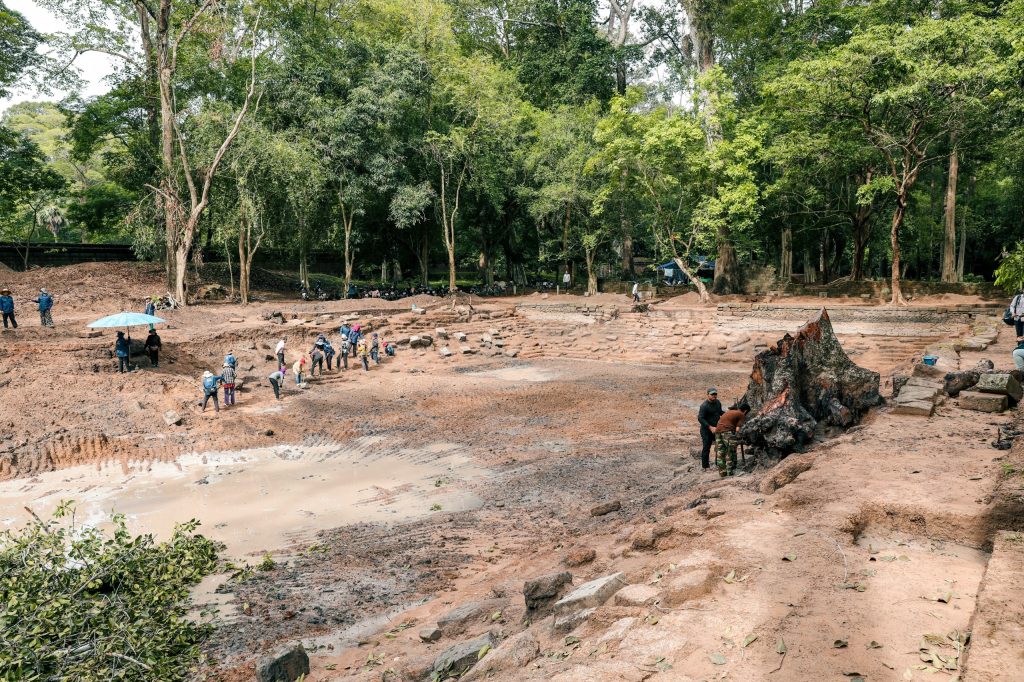
ក្នុងគោលបំណងលើកតម្លៃអតីតព្រះបរមរាជវាំងនៃក្រុងអង្គរធំ នាយកដ្ឋានអភិរក្សប្រាសាទនិងបុរាណវិទ្យា សហការជាមួយនាយកដ្ឋានគ្រប់គ្រងទឹក ព្រៃឈើ និងហេដ្ឋារចនាសម្ព័ន្ធ នៃអាជ្ញាធរជាតិអប្សរា បានចាប់ផ្តើមអនុវត្តការងារកំណាយបុរាណវិទ្យាចាប់តាំងពីខែកុម្ភៈមក។
គម្រោងនេះផ្តោតសំខាន់ទៅលើការសិក្សាប្រព័ន្ធរំដោះទឹកបុរាណពីបរិវេណប្រាសាទភិមានអាកាស និងស្រះបុរាណមួយ ដែលមានចុះក្នុងប្រព័ន្ធបញ្ជីបុរាណដ្ឋានរបស់ឯកសារចាស់របស់បារាំងលេខ១១ ដែលមានទីតាំងស្ថិតនៅខាងជើងកំពែងព្រះបរមរាជវាំងក្រុងអង្គរធំ។ គោលបំណងចម្បងនៃការស្រាវជ្រាវនេះ គឺដើម្បីកត់ត្រាប្រវត្តិប្លង់ស្ថាបត្យកម្ម និងប្រព័ន្ធវិស្វកម្មធារាសាស្ត្របុរាណវិភាគស្រទាប់ដីបុរាណវិទ្យា ស្វែងយល់ពីស្ថានភាពសំណង់ច្រាំងកាំជណ្តើរស្រះ និងប្រព័ន្ធរំដោះទឹក ព្រមទាំងការចាក់បង្គរនៃល្បាប់ដីថ្មី។ ជាពិសេសប្រមូលទិន្នន័យបុរាណវិទ្យាសម្រាប់ជាមូលដ្ឋានគ្រឹះក្នុងការស្តារ និងលើកតម្លៃប្រព័ន្ធគ្រប់គ្រងទឹកនេះឱ្យអាចដំណើរការឡើងវិញដូចសម័យបុរាណ។
ចំពោះលទ្ធផលនៃកំណាយបុរាណវិទ្យាលោក សួម សុភា បុរាណវិទូនៃអាជ្ញាធរជាតិអប្សរា បានឱ្យដឹងថា លទ្ធផលនៃការធ្វើកំណាយនៅទីតាំងស្រះលេខ១១ បានបង្ហាញនូវទិន្នន័យសំខាន់ៗដូចខាងក្រោម៖ រូបសណ្ឋាន និងទំហំ៖ ស្រះនេះមានរចនាសម្ព័ន្ធសាងសង់ឡើងអំពីថ្មបាយក្រៀម មានរាងចតុកោណកែង ដែលមានបណ្តោយ ៦៥ ម៉ែត្រ និងទទឹង ៣០ ម៉ែត្រ ព្រមទាំងមានកំពែងថ្មបាយក្រៀមព័ទ្ធជុំវិញ។
ចំពោះស្ថានភាពដីល្បាប់ ក្រុមអ្នកស្រាវជ្រាវបានរកឃើញថាកំណកដីចាក់បង្គរ (ល្បាប់ដី) ពីផ្ទៃខាងលើរហូតដល់បាតស្រះបុរាណ មានជម្រៅប្រមាណ ៣,៥ ម៉ែត្រ។
ទន្ទឹមនឹងនេះ ក្រុមការងារក៏សិក្សាកាលប្បវត្តិ និងសិល្បៈស្ថាបត្យកម្ម ដោយផ្អែកលើការវិភាគទៅលើសម្ភារបង្គុំសំណង់ ភស្តុតាងស្រទាប់ដី និងរចនាបថសិល្បៈ ក្រុមអ្នកជំនាញបានសន្និដ្ឋានថា រចនាសម្ព័ន្ធនៃស្រះលេខ១១ នេះ ត្រូវបានកសាងឡើងនៅចុងសតវត្សទី១២ ក្នុងរាជ្យព្រះបាទជ័យវរ្ម័នទី៧។
ភស្តុតាងដ៏លេចធ្លោបំផុត គឺការរកឃើញសិល្បៈចម្លាក់ដ៏ល្អឯក ដែលឆ្លាក់បង្ហាញពីទិដ្ឋភាព និងសកម្មភាពនៃការអុំទូកលំហែកាយ (លក្ខណៈសែនមនោរម្យ)។ ប្រព័ន្ធជីវចម្រុះ និងបរិស្ថានធម្មជាតិបុរាណ រួមមានសកម្មភាពសត្វបក្សាបក្សី សត្វល្មូន និងមច្ឆជាតិជាច្រើនប្រភេទដែលរស់នៅក្នុងប្រព័ន្ធទឹកនោះ។
រីឯទិសដៅការងារបន្ត ដែលក្នុងគោលបំណងថែរក្សា និងគាំពារបេតិកភណ្ឌវប្បធម៌អរូបីនិងរូបីដែលមានតម្លៃប្រវត្តិសាស្ត្រមិនអាចកាត់ថ្លៃបាន ក្រុមការងារបច្ចេកទេសនៃអាជ្ញាធរជាតិអប្សរា បាននិងកំពុងរៀបចំផែនការបន្ថែមរួមមាន៖ បន្តការស្រាវជ្រាវនិងធ្វើកំណាយបុរាណវិទ្យាបន្ថែមដើម្បីប្រមូលទិន្នន័យឱ្យបានគ្រប់ជ្រុងជ្រោយ និងរៀបចំគម្រោងជួសជុល និងពង្រឹងរចនាសម្ព័ន្ធសំណង់ឡើងវិញ ដើម្បីស្តារមុខងារស្រះដ៏ពិសិដ្ឋនេះឱ្យមានទឹក និងដំណើរការឡើងវិញ ព្រមទាំងលើកសម្រស់ទិដ្ឋភាពរូបវន្តនៃស្រះនេះឱ្យបានច្បាស់លាស់ សម្រាប់បម្រើដល់ការសិក្សាស្រាវជ្រាវ និងវិស័យទេសចរណ៍នាពេលអនាគត៕
អត្ថបទ៖ នាយកដ្ឋានស្រាវជ្រាវ បណ្តុះបណ្តាល និងផ្សព្វផ្សាយ
រូបភាព៖ ស៊ិន ប្រណី និងយី សុថា
To enhance the value of the former Royal Palace of Angkor Thom, the Department of Conservation of Monuments and Preventive Archaeology, in collaboration with the Department of Water, Forestry, and Infrastructure Management of the APSARA National Authority, has been conducting archaeological excavations since February.
The project focuses on studying the ancient water drainage system of the Phimeanakas temple complex and an ancient pond, identified in French documentation as Pond No. 11, located north of the Royal Palace in Angkor Thom. The main objectives of the research are to document the architectural and engineering history of the pond and its drainage system, examine archaeological soil layers, and better understand the condition of the pond’s embankments and water channels. These findings will serve as the foundation for restoring the pond and reviving its ancient drainage system to function as it once did.
Regarding the excavation results, Mr. Soum Sophea, an archaeologist of the APSARA National Authority, stated that investigations at Pond No. 11 revealed several important findings:
Shape and Size:
The pond features a rectangular laterite structure measuring approximately 65 meters in length and 30 meters in width and is enclosed by laterite walls.
Sedimentary Condition:
Researchers discovered sediment deposits extending approximately 3.5 meters deep from the surface to the bottom of the pond.
At the same time, the research team studied the chronology and architectural style of the structure. Based on analyses of construction materials, soil evidence, and artistic features, experts concluded that Pond No. 11 was built in the late 12th century during the reign of Jayavarman VII.
One of the most remarkable discoveries is the identification of unique carvings depicting leisure boating scenes, believed to reflect recreational activities during the Angkorian period. Additional evidence also illustrates the ancient natural environment and biodiversity, including various species of birds, reptiles, and fish associated with the water system.
To preserve and protect both tangible and intangible cultural heritage of invaluable historical significance, the technical team of the APSARA National Authority is preparing additional plans to continue research and conduct further archaeological excavations in order to gather more comprehensive data. The team also plans to develop a restoration project to strengthen the structure and revive the pond’s original function, allowing it to hold water once again while enhancing its physical appearance for future research and tourism.
Article by the Office of Communication
Photos by Sin Broney and Yi Sotha
Translation by Net Phirun