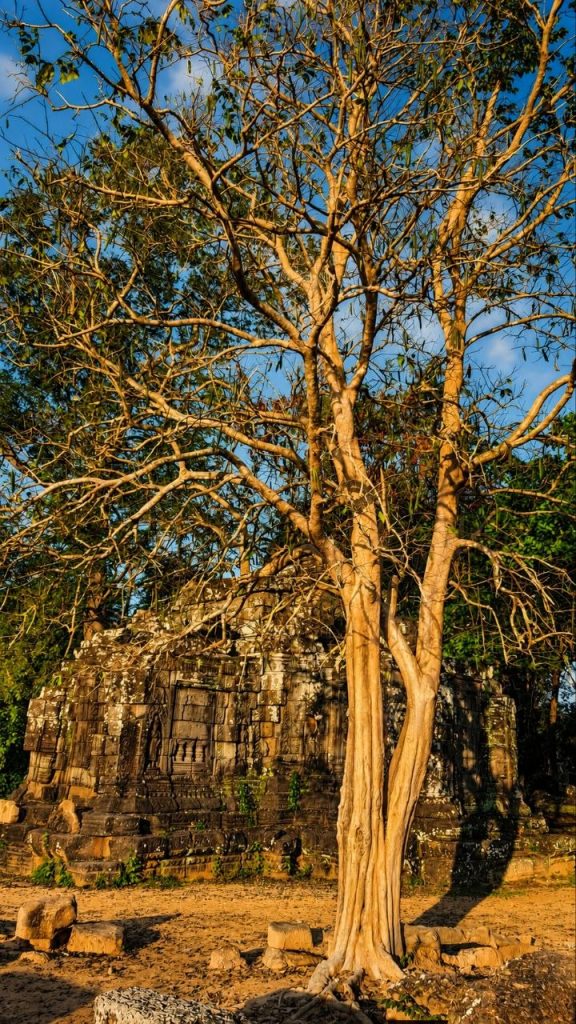
ប្រសិនបើអ្នកកំពុងស្វែងរកទីតាំងដ៏ស្ងប់ស្ងាត់ ដើម្បីទស្សនាពន្លឺព្រះអាទិត្យរៀបលិចជះពន្លឺមាសលើកំពែងបុរាណ ព្រមទាំងចង់ស្វែងយល់ពីអាថ៌កំបាំងនៃកំពែងថ្មដ៏ស្កឹមស្កៃនាសម័យអង្គរ ដែលជាគោលដៅមិនអាចរំលងបានឡើយ គឺប្រាសាទជ្រុងទិសនិរតីនៃអង្គរធំ។
ប្រាសាទជ្រុង ជាស្នាដៃវិចិត្រសិល្បៈលើកំពែងមហានគរ ស្ថិតនៅលើកែងកំពែងជួបគ្នារវាងទិសត្បូង និងទិសខាងលិចនៃរាជធានីអង្គរធំ ដែលទំនងជាឧបករណ៍សម្គាល់ពេលវេលាដ៏តូចច្រឡឹងមួយ ដែលកសាងឡើងនៅចុងសតវត្សរ៍ទី១២ ដោយស្នាព្រះហស្តដ៏ឧត្តុង្គឧត្តមនៃព្រះបាទជ័យវម៌ទី៧។
ជាសំណង់ស្ថាបត្យកម្ម សាងសង់ឡើងពីថ្មភក់ និងថ្មបាយក្រៀម បង្ហាញពីភាពរស់រវើក ទោះបីមានទំហំតូច ប៉ុន្តែគ្រប់ផ្នែកនៃសំណង់ប្រាសាទរំលេចទៅដោយចម្លាក់អាទិទេព និងក្បាច់រចនាផ្កាភ្ញីយ៉ាងល្អប្រណីត និងមានជីវិត។ ប្រាសាទនេះជាកន្លែងតម្កល់សិលាចារឹកដ៏សំខាន់ K.288 ជាកំណត់ត្រាប្រវត្តិសាស្ត្រ ដែលបានពិពណ៌នាយ៉ាងពិស្តារអំពីការស្ថាបនាមហាកំពែង កសិន្ធុទឹកព័ទ្ធជុំវិញ និងទ្វារចូលរាជធានីអង្គរធំ។
នៅខាងក្រោមកំពែងត្រង់នេះ មាន«រន្ធត្រដេវ» ដែលច្រកទ្វារបង្ហូរទឹកប្រើប្រាស់ហើយចេញក្រៅក្រុង។ បើយើងដើរហួសពីប្រាសាទទៅទិសខាងកើតប្រមាណ ២០០ ម៉ែត្រ តាមខ្នងកំពែង រួចចុះមកក្រោមនឹងបានជួបអច្ឆរិយភាពមួយទៀត គឺសំណង់ទ្វារបង្ហូរទឹក ហៅសព្វថ្ងៃថា«រន្ធត្រដេវ»។ វាជារន្ធទ្វារទឹកមានប្រាំស្ថិតនៅជាប់ៗគ្នា ដែលសង់ទម្លុះខាងក្រោមមហាកំពែងអង្គរធំ។ សំណង់នេះមានមុខងារធារាសាស្ត្រប្រើប្រាស់ជាច្រកទឹកដែលប្រើរួច (ទឹកស្អុយ) នៅក្នុងក្រុង ចេញមករក្សាទុកត្រង់បឹងធំមួយជាប់គ្នានេះ ទើបបានបង្ហូរចោលមកក្រៅក្រុងនៅភាគនិរតី៕
អត្ថបទ&រូបភាព៖ ការិយាល័យផ្សព្វផ្សាយ
If you are looking for a peaceful place to enjoy the sunset while discovering the engineering and history behind the ancient walls of Angkor Thom, the Southwest Prasat Chrung is a destination not to be missed.
Perched at the southwestern corner of Angkor Thom, where the city’s south and west walls meet, this small yet remarkable temple is believed to have been constructed during the reign of King Jayavarman VII in the late 12th century. Prasat Chrung is thought to have served as a small shrine, strategically positioned at the corner of the fortified capital.
Built of sandstone and laterite, the temple may be modest in size, but it showcases the elegance of Khmer craftsmanship. Its walls are adorned with finely carved deities and delicate floral motifs that reflect the artistic excellence of the Angkorian period. The temple is also home to the important inscription K.288, which records valuable historical information about the construction of Angkor Thom’s city walls, moats, and gates.
At the base of the city wall are ancient drainage outlets known locally as the Tra Dev Holes. Walking about 200 meters eastward along the inner side of the wall and descending from the embankment reveals another impressive feat of Khmer engineering—a series of five stone water gates built beneath the massive wall. These hydraulic structures carried wastewater from inside the city into a large reservoir outside the walls before it was discharged farther southwest, demonstrating the sophisticated urban water management system of the Angkorian Empire.
Today, the Southwest Prasat Chrung offers visitors not only spectacular sunset views over the forest and ancient fortifications but also a unique opportunity to appreciate the ingenuity, architecture, and history of one of Angkor Thom’s lesser-known treasures.
Article&Photos by the Office of Communication
Translation by Net Phirun