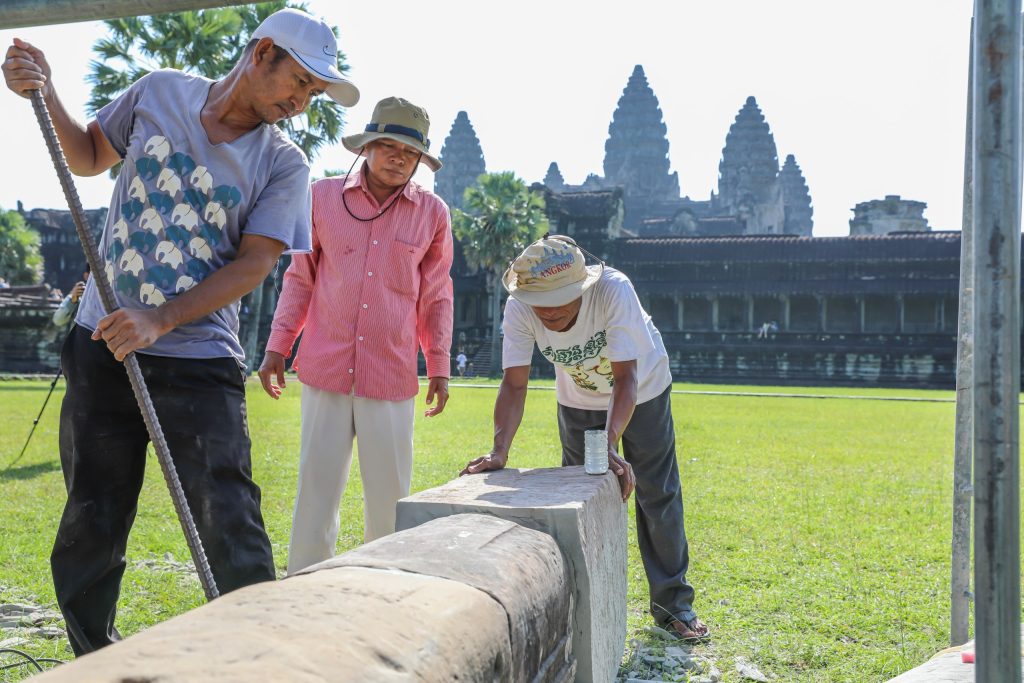
អាជ្ញាធរជាតិអប្សរា តាមរយៈនាយកដ្ឋានអភិរក្សប្រាសាទ និងបុរាណវិទ្យា កំពុងជួសជុលពង្រឹងរចនាសម្ព័ន្ធបង្កាន់ដៃនាគជ្រុងខាងលិច នៃរួតទី១ ប៉ែកខាងត្បូង នៃប្រាសាទអង្គរវត្ត ប្រវែង២០ម៉ែត្រ។
លោក សយ សុភារិន្ទ បុរាណវិទូនៃអាជ្ញាធរជាតិអប្សរាបានគូសបញ្ជាក់ថា កន្លងមកស្ថានភាពបង្កាន់ដៃនាគនៅប៉ែកខាងត្បូងបានបាក់ និងដួលរលំទាំងស្រុង ដែលតម្រូវឱ្យអាជ្ញាធរជាតិអប្សរាជួសជុល និងពង្រឹងរចនាសម្ព័ន្ធឡើងវិញ។ ដោយសារជាចំណុចពិសេសដែលភ្ញៀវទេសចរតែងឈរថតពីមាត់ស្រះខាងត្បូងឆ្លុះចាំងកំពូលប្រាសាទ ហើយទីតាំងដែលបាក់នេះនៅជាប់ប្លង់ថតផងនោះ ទើបអាជ្ញាធរជាតិអប្សរាលើកគម្រោងអាទិភាពសម្រាប់ការងារជួសជុល។
គម្រោងជួសជុលបង្កាន់ដៃនាគដែលមានប្រវែង២០ម៉ែត្រនេះ បានចាប់ផ្តើមនៅខែមិថុនា ហើយគ្រោងនឹងបញ្ចប់នៅចុងឆ្នាំ២០២៦ខាងមុខ។ ក្រុមការងារបានរើថ្ម តថ្មដែលបាក់បែក និងដាប់ឆ្លាក់ជើងទម្រ រួមនិងកំណាត់ដងខ្លួននាគថ្មីជំនួសទីតាំងដែលបាត់ថ្ម ឬថ្មខូចទ្រង់ទ្រាយ។ល។ អ្នកជំនាញបញ្ជាក់ថា ទីតាំង២០ម៉ែត្រនេះមានដងខ្លួននាគចំនួន៨ និងជើងទម្រចំនួន៩។ ថ្មចាស់ដែលនៅសេសសល់ អាចតភ្ជាប់ដងខ្លួននាគបានពី៣ទៅ៤កំណាត់ប៉ុណ្ណោះ ក្រៅពីនោះគេត្រូវជំនួសថ្មថ្មី។
បច្ចុប្បន្ន អាជ្ញាធរជាតិអប្សរាកំពុងធ្វើសម្រង់ប្លង់ហានិភ័យបង្កាន់ដៃនាគជុំវិញប្រាសាទអង្គរវត្ត បន្ថែមទៀត សម្រាប់រៀបចំផែនការជួសជុលនាពេលអនាគត៕
The APSARA National Authority, through its Department of Conservation of Monuments and Preventive Archaeology, is restoring and reinforcing a 20-meter section of the western naga balustrade in the first southern section of Angkor Wat.
Mr. Soy Sophearin, an archaeologist at the APSARA National Authority, explained that this section of the naga balustrade had completely collapsed over time, making structural restoration and reinforcement necessary. Because the site is one of the most popular locations where visitors take photographs overlooking the southern pond with the iconic reflection of Angkor Wat, the APSARA National Authority prioritized the conservation of this highly visited area.
The restoration project began in June 2026 and is expected to be completed by the end of the year. Conservation experts have carefully dismantled unstable stones, replaced damaged blocks, carved new pedestal elements, and produced new naga body sections to replace those that were missing or too deteriorated to be reused. According to the experts, the 20-meter section originally consisted of eight naga body segments supported by nine pedestals. However, the surviving original stones are sufficient to reconstruct only three to four naga body sections, while the remaining portions require newly carved replacement stones.
In addition to the ongoing restoration, the APSARA National Authority is preparing a comprehensive risk map of naga balustrades throughout the Angkor Wat complex. The assessment will help identify vulnerable sections and guide future conservation and restoration work.
Article by: Neang Samnang
Photos by: Sin Broney
Translation by: Net Phirun