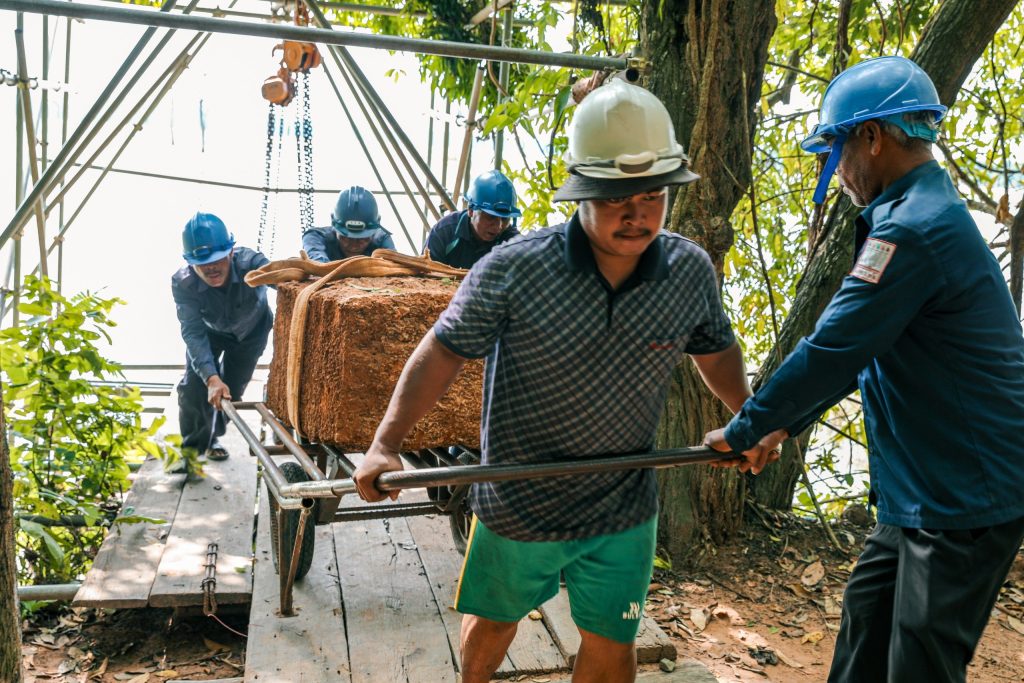
ក្រុមការងារនៃអាជ្ញាធរជាតិអប្សរា កំពុងមមាញឹកដឹកជញ្ជូនថ្មបាយក្រៀម និងថ្មភក់ ដែល១ដុំៗមានទម្ងន់ពី៥០០ទៅ៦០០គីឡូក្រាម ដើម្បីយកទៅត្រៀមរៀបចំជួសជុលកាំជណ្តើរ ផ្នែកខាងលិច របស់ប្រាសាទនាគព័ន្ធ ក្នុងដំណាក់កាលទី២ ដែលខូចខាតជាយូរមកហើយ ឱ្យប្រសើរឡើងវិញ។
លោក អ៊ិត ស្រេង បុគ្គលិកបច្ចេកទេសនាយកដ្ឋានអភិរក្សប្រាសាទ និងបុរាណវិទ្យា នៃអាជ្ញាធរជាតិអប្សរា បានឱ្យដឹងថា កម្លាំងកម្មករជាង១២នាក់ កំពុងតែទទួលខុសត្រូវលើការងារដឹកជញ្ជូនថ្មបាយក្រៀម និងថ្មភក់ មកកាន់ប្រាសាទនាគព័ន្ធ។ លោកបន្តទៀតថា មធ្យោបាយចម្បងៗ ដែលប្រើប្រាស់ក្នុងការដឹកជញ្ជូនថ្ម មានការដឹកជញ្ជូនតាមផ្លូវទឹក ដោយប្រើទូកចំនួនពីរគ្រឿងចងភ្ជាប់គ្នា ទៅដឹកថ្មពីដីគោកចម្ងាយប្រហែល៤០០ម៉ែត្រ សំដៅទៅការដ្ឋាន ដោយមួយជើងៗ ចំណុះទូកអាចផ្ទុកទម្ងន់បានចាប់ពី១តោន ហើយអុំបណ្តែតតាមទឹកបារាយណ៍ រួចហើយប្រើឧបករណ៍កៅឡាក់លើកដាក់លើរន្ទា លើកថ្មឡើងមកលើគោក និងរុញថ្មទាំងនោះ ចូលទីតាំងដែលត្រូវការ។
ចំណែកមធ្យោបាយដឹកជញ្ជូនដំណាក់កាលទី២ គឺលើកថ្មដាក់លើរទេះរុញ ហើយអូសដោយកម្លាំងមនុស្ស។ ការដឹកជញ្ជូនថ្មដំណាក់កាលទី២នេះ មានរយៈចម្ងាយប្រមាណ៣០០ម៉ែត្រ ពីកំពង់ទឹកទៅដល់ការដ្ឋាន។
លោក អ៊ិត ស្រេង បញ្ជាក់ថា ការជញ្ជូនថ្មនេះ មានការលំបាកច្រើន ដោយត្រូវអត់ធ្មត់ និងរួបរួមគ្នាទើបអាចធ្វើការងារនេះបាន ហើយអ្នកទាំងអស់ ត្រូវមាន
បច្ចេកទេសនៃការអូស ឬយកថ្មឱ្យទៅដល់ទីកន្លែងជួសជុល។
ក្រុមការងារជួសជុលកាំជណ្តើរ ផ្នែកខាងលិចរបស់ប្រាសាទនាគព័ន្ធ បានប្រើប្រាស់កម្លាំងកម្មករចំនួន១២នាក់ សម្រាប់ប្រតិបត្តិការដឹកជញ្ជូនថ្មនេះ។ ក្នុង១ថ្ងៃៗ ក្រុមការងារអាចជញ្ជូនថ្មបានចំនួន៨ដុំ។
ការដឹកជញ្ជូនថ្មដ៏លំបាកនេះ បានចាប់ផ្ដើមតាំងពីកណ្ដាលខែឧសភា ឆ្នាំ២០២៦ រហូតមកដល់ពេលនេះ កម្លាំងការងារបានដឹកជញ្ជូនថ្មចំនួន ៥០ដុំ ហើយអាចចំណាយពេលជាង២ខែ ទើបអាចនាំថ្មគ្រប់ចំនួនសម្រាប់ប្រើប្រាស់តាមតម្រូវការជួសជុល។ បុគ្គលិកគ្រប់គ្រងការដ្ឋានជួសជុលកាំជណ្តើរ ផ្នែកខាងលិច របស់ប្រាសាទនាគព័ន្ធ ឱ្យដឹងថា ការជញ្ជូនថ្មដ៏លំបាកនេះ យើងត្រូវអត់ធ្មត់ រួបរួមគ្នាទើបអាចធ្វើការងារនេះបាន ហើយអ្នកទាំងអស់ ត្រូវមានបច្ចេកទេសនៃការអូស ឬយកថ្មទៅដល់ទីកន្លែងជួសជុល ព្រោះវាមានទម្ងន់ធ្ងន់ចាប់ពីរយគីឡូក្រាម រហូតដល់រាប់តោន ទាមទារការប្រើប្រាស់បច្ចេកទេសខ្ពស់កុំឱ្យខូចខាត ឬប៉ះពាល់ថ្ម៕
អត្ថបទ៖ ឆាយ ផាន់នី
រូបភាព៖ ស៊ិន ប្រណី
The APSARA National Authority’s restoration team is transporting laterite and sandstone blocks, each weighing between 500 and 600 kilograms, to support the second phase of the restoration of the damaged western steps of Neak Poan Temple.
Mr. Ith Sreng, a technical staff member of the Department of Conservation of Monuments and Preventive Archaeology at the APSARA National Authority, explained that more than 12 workers are involved in transporting the stone blocks to Neak Poan Temple.
Due to the temple’s location, the stones are primarily transported by water. Two boats are securely tied together to carry the heavy blocks approximately 400 meters across the baray from the mainland to the restoration site. Together, the boats can carry up to one tonne of stone per trip. Upon arrival, a crane lifts the stones onto scaffolding, allowing them to be transferred onto land before being moved to the designated restoration area.
The second stage of the journey involves placing each stone onto a wheelbarrow and transporting it manually over a distance of about 300 meters from the landing point to the work site.
Mr. Ith Sreng noted that transporting the stones is an extremely challenging task that requires patience, teamwork, and specialized techniques. Every worker must understand the proper methods of lifting, pulling, and moving the heavy stone blocks to avoid damaging either the materials or the workers. Some of the stones weigh several hundred kilograms, while others approach one tonne, making careful handling essential.
A team of 12 workers carries out the transportation work, and on average they are able to move eight stone blocks each day.
The transportation operation began in mid-May 2026. To date, the team has successfully transported 50 stone blocks, and it is expected to take more than two months to deliver all of the stones required for the restoration project.
Article by: Chhay Phanny
Photos by: Sin Broney
Translation by: Net Phirun