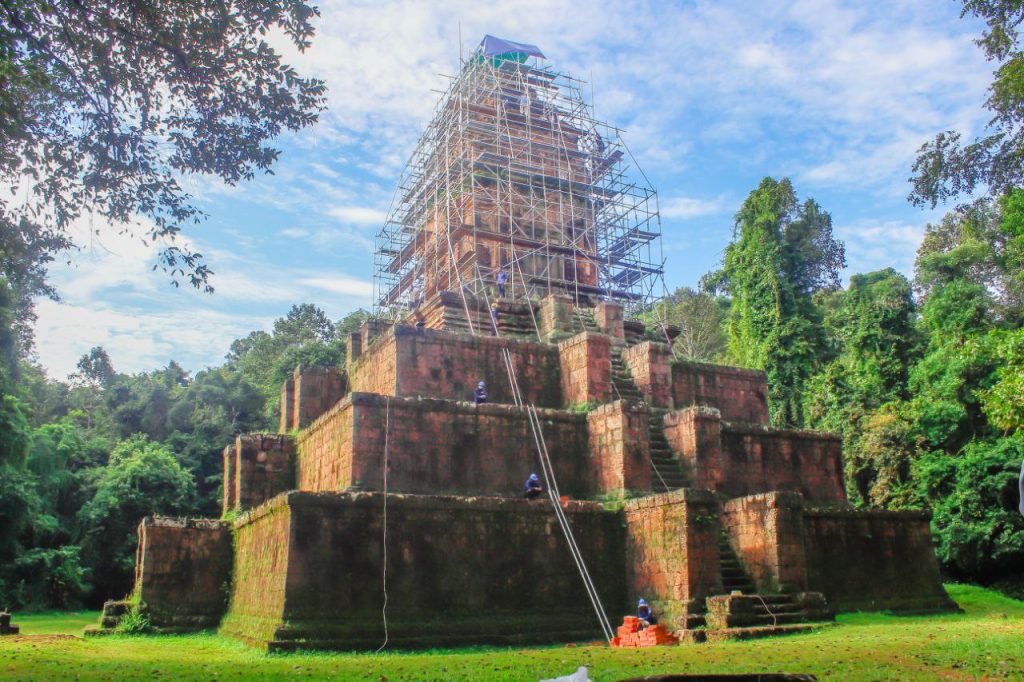
អាជ្ញាធរជាតិអប្សរា តាមរយៈក្រុមការងារជំនាញបាននិងកំពុងទល់ទ្រ និងអភិរក្សជួសជុលប្រាសាទ បក្សីចាំក្រុង ខណៈដែលប្រាសាទឥដ្ឋដែលមានអាយុកាលជាង១ ០០០ឆ្នាំមួយនេះមានភាពទ្រុឌទ្រោមខ្លាំង។
ប្រធានគម្រោងអភិរក្សប្រាសាទបក្សីចាំក្រុង លោក ពុទ្ធ សុទ្ធ បានឱ្យដឹងថា ប្រាសាទនេះមានខឿនថ្មបាយក្រៀម៤ថ្នាក់ និងមានកម្ពស់សរុប ២៩,២០ម៉ែត្រ។ ការទល់ទ្រ និងអភិរក្សសង្រ្គោះបន្ទាន់នេះធ្វើឡើងបន្ទាប់ពីផ្នែកដំបូលនៃប្រាសាទនេះមានភាពទ្រុឌទ្រោមខ្លាំង។ បន្ទាប់ពីមានការត្រួតពិនិត្យត្រឹមត្រូវ និងហ្មត់ចត់ ថ្នាក់ដឹកនាំអាជ្ញាធរជាតិអប្សរា បានសម្រេចជាគោលការណ៍ ឱ្យមានក្រុមការងារទល់ទ្រអភិរក្សជាបន្ទាន់។ លោក ពុទ្ធ សុទ្ធ បន្ថែមថា កន្លែងហានិភ័យខ្លាំងនៅក្នុងប្រាសាទនេះ គឺនៅផ្នែកដំបូល និងផ្នែកខ្លះនៃជញ្ជាំង។
ដោយសារជាប្រាសាទខ្ពស់ ដូច្នេះគេត្រូវប្រើកម្លាំងពលករច្រើន ដើម្បីជញ្ជូនសម្ភារផ្សេងៗឡើងលើប្រាសាទ ហើយត្រូវសង់រន្ទា ដើម្បីរៀបចំទល់ទ្រ ទប់លំនឹងកំពូលប្រាសាទនេះ។ មន្រ្តីដដែលបានបញ្ជាក់ថា វាជាការសម្រេចចិត្តដ៏ល្អបំផុត និងទាន់ពេលវេលា ដើម្បីបង្ការហានិភ័យខ្ពស់ជាងនេះ ដែលតម្រូវឱ្យមានផែនការជួសជុល សម្រាប់ថ្ងៃអនាគតផងដែរ៕
អត្ថបទ៖ នាង សំណាង
រូបភាព៖ ស៊ិន ប្រណី
The APSARA National Authority, through its restoration team, has been carrying out structural support work on several high-risk sections of the 1,000-year-old Baksei Chamkrong Temple, which is currently in a severely deteriorated condition.
According to Mr. Puth Soth, head of the Baksei Chamkrong restoration site, the temple is a pyramid-shaped structure with a four-tiered laterite base, rising 29.20 meters in height. The conservation initiative was launched after the temple’s roof showed signs of serious damage. Following a thorough inspection, the APSARA National Authority decided to proceed with urgent stabilization and conservation measures. Mr. Puth Soth added that the most vulnerable areas identified are the roof and portions of the temple’s walls.
Due to the temple’s height, a significant workforce was mobilized to transport materials and install scaffolding in preparation for the restoration and stabilization of the upper sections. Mr. Puth Soth emphasized that the intervention was a timely and necessary decision to prevent further risks, while also underscoring the importance of developing a long-term restoration plan for the temple’s preservation.
Article by: Neang Samnang
Photos by: Sin Broney
Translation by: Net Phirun