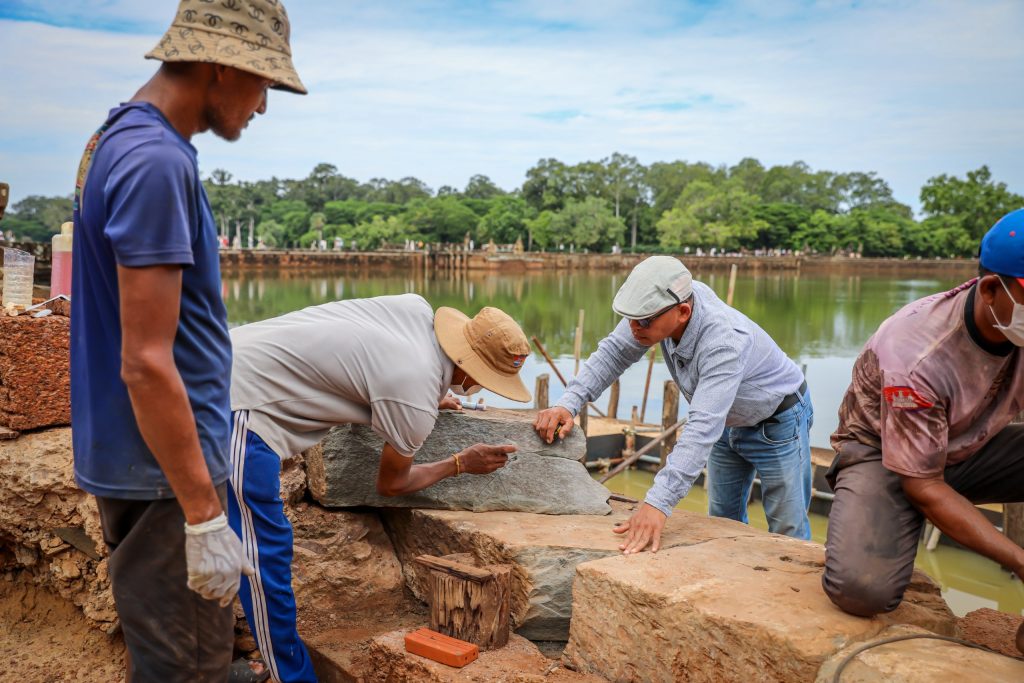
នាយកដ្ឋានអភិរក្សប្រាសាទ និងបុរាណវិទ្យានៃអាជ្ញាធរជាតិអប្សរា កំពុងជួសជុលរចនាសម្ព័ន្ធច្រាំងកសិន្ធុខាងលិចប្រាសាទអង្គរវត្ត ផ្នែកខាងក្នុងខាងជើងស្ពានហាលប្រវែង២០ម៉ែត្រ ដែលកន្លងមកទីតាំងនេះមានការដួលរលំ ដោយសារធម្មជាតិ និងអាយុកាលនៃថ្ម។
លោក អន សុភាព បុរាណវិទូនៃអាជ្ញាធរជាតិអប្សរា បានឱ្យដឹងថា ការងារជួសជុលច្រាំងកសិន្ធុនេះ ធ្វើឡើងបន្ទាប់ពីថ្នាក់ដឹកនាំអាជ្ញាធរជាតិអប្សរាបានចុះពិនិត្យ និងឃើញពីការដួលរលំ ក៏ដូចជាដើម្បីលើកតម្លៃនៃកសិន្ធុនេះឡើងវិញ ដ្បិតថាវាមានភាពទាក់ទាញមួយផ្នែកសម្រាប់ភ្ញៀវទេសចរ ដែលនិយមឈរថតផ្តិតយករូបភាពប្រាសាទអង្គរវត្តពីច្រាំងកសិន្ធុខាងក្រៅមក។ ទីតាំងនេះធ្លាប់បានជួសជុលរួចម្តងហើយនៅអំឡុងឆ្នាំ ១៩៨៦ ដល់១៩៩៣ ដោយស្ថាប័នស្រាវជ្រាវបុរាណវិទ្យានៃប្រទេសឥណ្ឌា( Archaeological Survey of India) ដែលមានប្រវែងពីស្ពានហាលសរុប ១៤០ម៉ែត្រ។ ប៉ុន្តែដោយសារប្រព័ន្ធបង្ហូរទឹកបានរងនូវការខូចខាតដែលមិនអាចដោះទឹកភ្លៀងបានទាន់ពេលវេលា បណ្តាលឱ្យមានការហូរច្រោះដីចេញពីផ្នែកខាងក្រោមរចនាសម្ព័ន្ធច្រាំងកសិន្ធុ និងធ្វើឱ្យដួលរលំ នៅផ្នែកខាងចុង ប្រហែល៨ម៉ែត្រ។
អាជ្ញាធរជាតិអប្សរាបានលើកគម្រោងជួសជុលបន្តពីកន្លែងដែលដួលចំនួន២០ម៉ែត្រ ដែលការជួសជុលនេះ គោរពទៅតាមបច្ចេកទេស និងបទពិសោធន៍ដែលធ្លាប់បានអនុវត្ត ក្នុងគម្រោង ជួសជុលច្រាំងកសិន្ធុប៉ែកខាងក្រៅរួចហើយ។ ការជួសជុលគោរពទៅតាមបច្ចេកទេសបុរាណ ដោយរើថ្ម រៀបចំគ្រឹះ បុកបង្ហាប់ដីឥដ្ឋ រៀបថ្មបាយក្រៀម និងថ្មភក់ពីលើ។
ដោយសារកត្តាអាយុកាលធ្វើឱ្យថ្មបាយក្រៀមនៅផ្នែកខាងក្រោមរងការខូចខាត និងបាត់រូបរាង ស្ទើរទាំងស្រុង ដែលតម្រូវឱ្យក្រុមការងារប្រើថ្មថ្មីជំនួសច្រើន រីឯថ្មភក់នៅសេសសល់ច្រើន។ លោក អន សុភាព បានបញ្ជាក់ថា រចនាសម្ព័ន្ធច្រាំងកសិន្ធុខាងជើង ប៉ែកខាងក្នុងនេះ មានរូបរាងដូច ទៅនឹងខាងក្រៅដែរ គ្រាន់តែនៅផ្នែកខាងក្នុងមានជណ្តើរពីថ្មបាយក្រៀមតែ៦កាំ និងថ្មភក់៤កាំ ខុសពីខាងក្រៅ ដែលមានថ្មបាយក្រៀម៧កាំ និងថ្មភក់៣កាំវិញ។
លោក អន សុភាព មានសុទិដ្ឋិនិយមថា ច្រាំងកសិន្ធុខាងលើនឹងមានរូបរាងស្រស់ស្អាតឡើងវិញ ដើម្បីលើកសោភ័ណភាពប្រាសាទអង្គរវត្ត ដែលជាប្រាសាទដ៏ស្កឹមស្កៃកាន់តែទាក់ទាញបន្ថែមទៀត៕
អត្ថបទ៖ នាង សំណាង
រូបភាព៖ ស៊ិន ប្រណី
The APSARA National Authority, through its Department of Conservation of Monuments and Preventive Archaeology, is restoring a 20-meter section of the northern part of Angkor Wat’s western embankment that collapsed due to natural deterioration and the age of the ancient stone structure.
According to Mr. An Sopheap, an archaeologist with the APSARA National Authority, the project was initiated after the Authority’s leadership inspected the damaged area. The restoration aims to stabilize the embankment while preserving one of the temple’s popular viewpoints overlooking the outer moat.
The collapsed section had previously been restored by the Archaeological Survey of India between 1986 and 1993. Damage to the drainage system later caused soil beneath the embankment to erode, leading to the collapse of approximately eight meters of the structure.
The current work follows traditional conservation techniques, including strengthening the foundation, compacting clay, and reconstructing the embankment with laterite and sandstone. While many deteriorated laterite blocks are being replaced, most of the original sandstone blocks are being reused.
Once completed, the restoration will improve the stability and appearance of the embankment, helping preserve the beauty and integrity of Angkor Wat for future generations.
Article by Neang Samnang
Photos by Sin Broney
Translation by Net Phirun