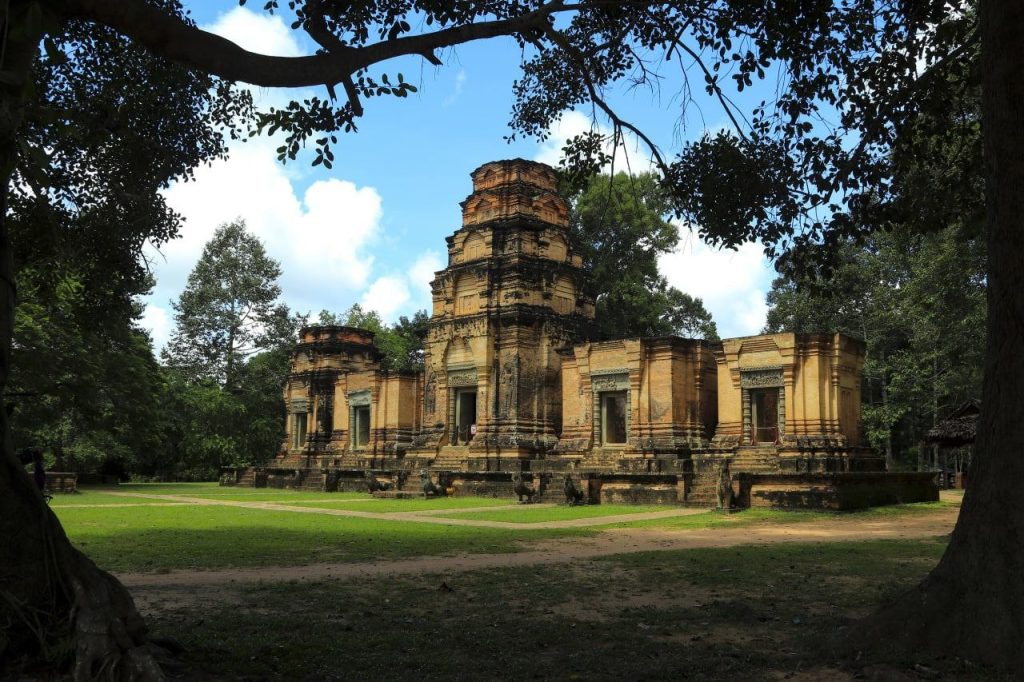
ប្រាសាទក្រវ៉ាន់ គឺជាត្បូងពេជ្រដ៏មានតម្លៃមួយនៃសិល្បៈខ្មែរនាសតវត្សរ៍ទី១០។ ប្រាសាទនេះមានទីតាំងស្ថិតនៅភូមិក្រវ៉ាន់ សង្កាត់នគរធំ ក្រុងសៀមរាប ខេត្តសៀមរាប។ ផ្អែកតាមសិលាចារឹកលេខ K-269 ប្រាសាទនេះត្រូវបានកសាងឡើងនៅក្នុងឆ្នាំ ៩២១ នៃគ.ស ក្នុងរាជ្យ ព្រះបាទហស៌វរ្ម័នទី១ (គ.ស ៩១០-៩២៣) ដោយមន្ត្រីជាន់ខ្ពស់មួយក្រុមដឹកនាំដោយ ស្តែងអញស្រីវីរេន្ទ្រាធិបតីវម៌្ម, ស្តែងអញមហីធរវម៌្ម និងស្តែងអញជ័យវីរវម៌្ម ដើម្បីឧទ្ទិសថ្វាយដល់ព្រះវិស្ណុ (ព្រះនារាយណ៍) ក្នុងព្រហ្មញ្ញសាសនា ក្រោមព្រះនាមជាទីគោរពថា «ស្រីត្រីភូវនេស្វាមិ» និង «ស្រីត្រៃលោក្យនាថ»។
ក្រៅពីប្រវត្តិសាស្ត្រដ៏យូរលង់ ប្រាសាទក្រវ៉ាន់លេចធ្លោដាច់គេដោយសារតម្លៃពិសេសៗចំនួន ៣ យ៉ាង៖ ទី១ គឺតម្លៃស្ថាបត្យកម្មឥដ្ឋនៃក្តីទាំង៥ លើខឿនជួរតែមួយ ដែលខុសប្លែកពីប្រាសាទភ្នំ ឬប្រាសាទដែលមានការរៀបចំជាទម្រង់ប្រាំទិស (បែបផ្កាឈូក) ប្រាសាទក្រវ៉ាន់បង្ហាញពីដួងព្រលឹងស្ថាបត្យកម្មដ៏ប្លែកភ្នែក។ ទី២ គឺស្ថាបត្យកម្មនៃការរៀបជួរក្តីលើបន្តាត់តែមួយ ដែលក្តីឥដ្ឋទាំង៥ ត្រូវបានសាងសង់តម្រៀបគ្នាជាជួរត្រង់ បែរមុខទៅទិសខាងកើត។ ទី៣ គឺក្តីតាំង៥ឈរលើខឿនតែមួយដែលសាងខ្ពស់ធ្វើពីថ្មបាយក្រៀម ដែលជានិមិត្តរូបនៃភាពឯកភាព និងតុល្យភាពយ៉ាងល្អឥតខ្ចោះ។ ក្តីកណ្តាលមានទំហំធំជាងគេ រីឯក្តីអមសងខាងមានទំហំតូចទៅៗតាមលំដាប់លំដោយ។
ទន្ទឹមនឹងនេះ ចម្លាក់ក្រទ្បោតទាបល្អឯកលើជញ្ជាំងឥដ្ឋខាងក្នុងក្តី ដែលជាទូទៅ ស្ថាបត្យករខ្មែរបុរាណច្រើនឆ្លាក់ចម្លាក់របៀបនេះនៅលើថ្មភក់។ ប៉ុន្តែនៅប្រាសាទក្រវ៉ាន់ ភាពអស្ចារ្យបានស្តែងឡើងតាមរយៈការដាប់ឆ្លាក់ដោយផ្ទាល់នៅលើផ្ទៃឥដ្ឋនៅខាងក្នុងតួក្តី ដែលនេះជាបច្ចេកទេសដ៏កម្រ និងធ្វើឡើងដោយភាពផ្ចិតផ្ចង់បំផុត។ នៅក្នុងក្តីកណ្តាល មានចម្លាក់ធំៗចំនួន៣ផ្ទាំង រៀបរាប់ពីមហិទ្ធិឫទ្ធិរបស់ព្រះវិស្ណុ រួមមាន៖ ព្រះវិស្ណុមានដៃ៤ (ទ្រង់ស័ង្ខ ថាស កង ចក្រ និងដំបង) ព្រះវិស្ណុឈានជើងកាត់ភពទាំងបី (ត្រីវិក្រម) និងព្រះវិស្ណុគង់លើគ្រុឌ។ នៅក្នុងក្តីខាងជើង មានចម្លាក់ដ៏វិសេសវិសាលរបស់ព្រះនាងលក្ស្មី (មហេសីព្រះវិស្ណុ) ដែលបង្ហាញពីភាពទន់ភ្លន់ ល្វតល្វន់ ប៉ុន្តែពោរពេញដោយអំណាចចេស្តា។
លើសពីនេះទៅទៀត ប្រាសាទក្រវ៉ាន់មានអាថ៌កំបាំងនៃគំនូរពណ៌បុរាណលើឥដ្ឋ ដែលមានអាយុកាលជាង១០០០ពាន់ឆ្នាំ។ នោះគឺជាអ្វីដែលជាដានប្រវត្តិសាស្ត្រដ៏រំភើប និងកម្ររកបាននៃភស្តុតាងនៃគំនូរពណ៌បុរាណ។ នៅលើផ្ទៃចម្លាក់ឥដ្ឋទាំងនោះ អ្នកស្រាវជ្រាវបានរកឃើញស្លាកស្នាមនៃជ័រឈើ និងល័ក្ខពណ៌ (ដូចជាពណ៌ក្រហម) ដែលបុព្វបុរសបានលាបលម្អពីលើចម្លាក់ឥដ្ឋ។ នេះបញ្ជាក់ថា កាលពីដើមឡើយ ផ្ទៃខាងក្នុងនៃតួក្តីមិនមែនមានត្រឹមតែពណ៌ដីដុតនៃឥដ្ឋនោះទេ ប៉ុន្តែបានតុបតែងដោយពណ៌ស្រស់ឆើតឆាយ បង្កើតបានជាផ្ទាំងទស្សនីយភាពសិល្បៈដ៏រស់រវើក គួរឱ្យស្ងើចសរសើរខ្លាំងណាស់។
ប្រាសាទក្រវ៉ាន់ មិនគ្រាន់តែជាកន្លែងសក្ការបូជាធម្មតានោះទេ ប៉ុន្តែវាជាវិចិត្រសាលសិល្បៈដ៏មហិមាដែលបង្ហាញពីកំពូលជើងកាត់នៃបច្ចេកវិទ្យាដុត និងឆ្លាក់ឥដ្ឋរបស់ខ្មែរ ដែលគ្មានពីរនៅក្នុងប្រវត្តិសាស្ត្រសិល្បៈអាស៊ីអាគ្នេយ៍។ ប្រាសាទក្រវ៉ាន់ដែលស្ថិតនៅក្នុងតំបន់រមណីយដ្ឋានអង្គរក៏ត្រូវបានអភិរក្សដោយអាជ្ញាធរជាតិអប្សរា បន្ទាប់ពីអង្គរត្រូវបានដាក់បញ្ចូលជាសម្បត្តិបេតិកភណ្ឌពិភពលោក៕
អត្ថបទ&រូបភាព៖ ការិយាល័យផ្សព្វផ្សាយ
Kravan Temple is a precious gem of 10th-century Khmer art. Located in Kravan Village, Nokor Thom Commune, Siem Reap Province, the temple was built in 921 CE during the reign of King Harshavarman I (910–923 CE). According to inscription K.269, it was commissioned by a group of high-ranking officials and dedicated to Vishnu under the revered name Trailokyanātha (“Lord of the Three Worlds”).
Beyond its long history, Kravan Temple is distinguished by three remarkable values.
First is its unique architectural design. Unlike the mountain temples or the quincunx (lotus-pattern) temple layouts commonly found in Khmer architecture, Kravan Temple consists of five brick shrines arranged in a single row, giving the monument a distinctive architectural identity.
Second is the harmonious composition of the shrine arrangement. All five towers face east and stand in a straight line upon a single laterite platform. The central shrine is the largest, while the four flanking shrines gradually decrease in size, creating a balanced and unified composition.
Third is the temple’s extraordinary brick artistry. The bas-reliefs carved on the interior brick walls are exceptionally rare. While ancient Khmer sculptors typically created reliefs on sandstone, the artisans of Kravan Temple carved directly into brick surfaces with remarkable skill and precision. Inside the central shrine are three monumental depictions of Vishnu: the four-armed Vishnu, Vishnu Striding Across the Three Worlds (Trivikrama), and Vishnu seated on a lotus throne. The northern shrine features a graceful yet powerful image of Lakshmi, the eternal consort of Vishnu.
Kravan Temple also preserves evidence of ancient brick paintings dating back more than 1,000 years. Researchers have discovered traces of resin and lacquer pigments, including red coloring, on the surfaces of the brick reliefs. These findings reveal that the temple’s interior was once far more vibrant than the natural color of baked brick, adorned with brilliant colors that created a striking and impressive artistic environment.
More than a simple sanctuary, Kravan Temple is a magnificent gallery of Khmer artistic achievement. It showcases advanced techniques in brick production, carving, and decoration that remain unparalleled in the history of Southeast Asian art. As part of the Angkor Archaeological Park, the temple has been carefully preserved by the APSARA National Authority since Angkor’s inscription on the UNESCO World Heritage List.
Article and Photos by the Office of Communication
Translation by Net Phirun