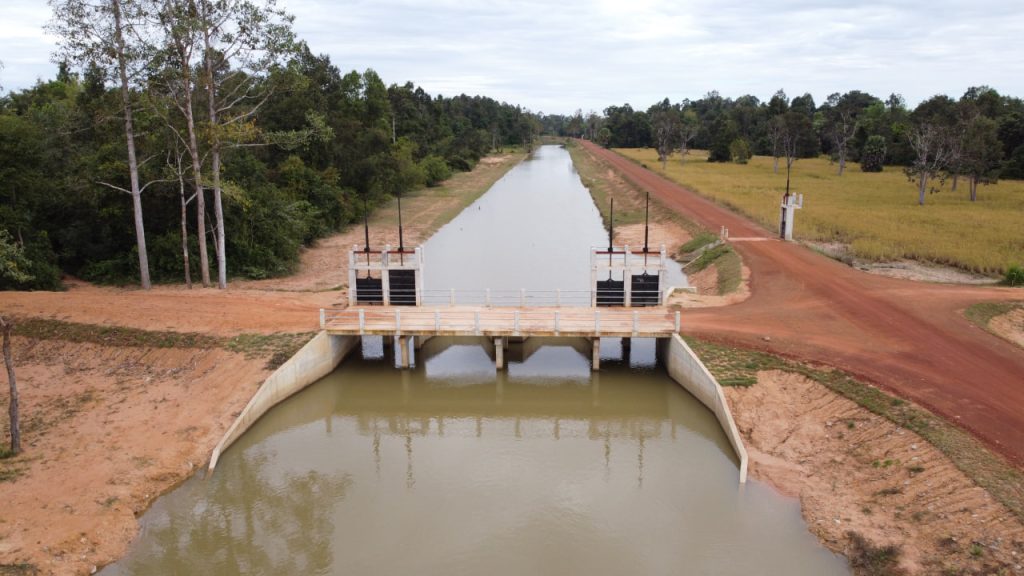
តាមរយៈគម្រោងគ្រប់គ្រងទឹកអង្គរប្រកបដោយប្រសិទ្ធភាព និងចីរភាពដើម្បីភាពធន់នឹងការប្រែប្រួលអាកាសធាតុ និងសង្គមសេដ្ឋកិច្ច ឬ Angkor Water Resilience Project (AWR) របស់អាជ្ញាធរជាតិអប្សរា បានធ្វើការជួសជុល និងស្តារទំនប់/ប្រឡាយបុរាណមួយខ្សែដែលមានប្រវែងសរុប៨៣០០ម៉ែត្រ ដែលស្ថិតនៅខាងជើងក្រុងអង្គរធំ ចាប់ពីភូមិភ្លង់ ឃុំលាងដៃ រហូតដល់តំបន់អភិវឌ្ឍពាក់ស្នែង ស្រុងអង្គរធំ។
ទំនប់ប្រឡាយទឹកបុរាណនេះបានបញ្ចប់រួចរាល់ជាស្ថាពរ និងបានរួមចំណែកក្នុងការងារអភិរក្សទំនប់ប្រឡាយបុរាណ ទេសភាពវប្បធម៌ និងជាការស្តារប្រព័ន្ធប្រមូលទឹកពីផ្នែកខាងជើងក្រុងអង្គរធំ ដើម្បីផ្គត់ផ្គង់តាមកសិន្ធុអាងទឹកបុរាណមួយចំនួន និងជួយបំពេញទឹកក្រោមដីក្នុងតំបន់អង្គរ ព្រមទាំងអាចជួយរំដោះទឹកភ្លៀងចេញពីភូមិដ្ឋានរបស់ពលរដ្ឋក្នុងឃុំលាងដៃ និងពាក់ស្នែងផងដែរ។ ប្រឡាយនេះក៏មានតួនាទីជួយរក្សាទឹកទុកសម្រាប់ពលរដ្ឋនៅសងខាងប្រឡាយ យកទៅស្រោចស្រពស្រែចម្ការ ដំណាំ និងផ្តល់ជាផលនេសាទ ព្រមទាំងមានធ្វើជាផ្លូវគ្រួសក្រហមមួយខ្សែលើខ្នងទំនប់ស្របមាត់ប្រឡាយ សម្រាប់ពលរដ្ឋក្នុងភូមិអាចធ្វើចរាចរ និងដឹកជញ្ជូនកសិផលជាដើម។
ក្រៅពីការងារស្តារប្រឡាយ ជួសជុលទំនប់ និងធ្វើផ្លូវនេះ គម្រោងAWR ក៏បានធ្វើការជួសជុលសំណង់ទ្វារទឹកដែលមានស្រាប់ចំនួនបីទីតាំង និងសាងសង់សំណង់ធារាសាស្រ្តថ្មីចំនួន១៧ទីតាំង តាមបណ្តោយទំនប់ប្រឡាយបុរាណនេះផងដែរ ដើម្បីជាការបង្កើនសមត្ថភាពក្នុងការងារគ្រប់គ្រង ប្រមូល រក្សាទឹកទុក និងចែកចាយផងដែរ។
គួររំឭកផងដែលថា គម្រោងAWR គឺជាគំនិតផ្តួចផ្តើមរបស់អាជ្ញាធរជាតិអប្សរា ក្រោមជំនួយឧបត្ថម្ភពីក្រសួងការបរទេស និងពាណិជ្ជកម្ម(MFAT)នៃប្រទេសនូវែលហ្សេឡង់ (New Zealand) ដែលកំពុងអនុវត្តដោយអង្គការលីវអែនលឺន(Live & Learn)៕
អត្ថបទ និងរូបភាព៖ ក្រុមការងារគម្រោង AWR
Through the Angkor Water Resilience Project (AWR), the APSARA National Authority restored an 8,300-meter-long ancient dam and canal stretching from Phlong village in Leang Dai commune to the Peak Sneng development area within Angkor Thom. The restoration project began in March 2024 and was completed in December 2025.
This initiative has made a significant contribution to the conservation of the ancient hydraulic system and the cultural landscape of the Angkor region. It has also revived the water collection system north of Angkor Thom, helping to supply several ancient moats, recharge groundwater, and improve overall water management. In addition, the canal supports the discharge of rainwater from nearby communities, including Leang Dai and Peak Sneng communes.
The restored canal now provides multiple benefits to local residents. It serves as a vital water source for irrigation, supporting agricultural production and crop cultivation, while also offering opportunities for fishing. A red gravel road constructed along the dam further improves accessibility, enabling villagers to travel more easily and transport agricultural products.
As part of the project, three existing water gates were rehabilitated, and 17 new irrigation structures were constructed along the canal, enhancing capacity for water storage, management, and distribution.
The AWR project is an initiative of the APSARA National Authority, supported by the Ministry of Foreign Affairs and Trade (MFAT) of New Zealand, and implemented by Live & Learn.
Article and Photos by Angkor Water Resilience Project
Translation by Net Phirun