
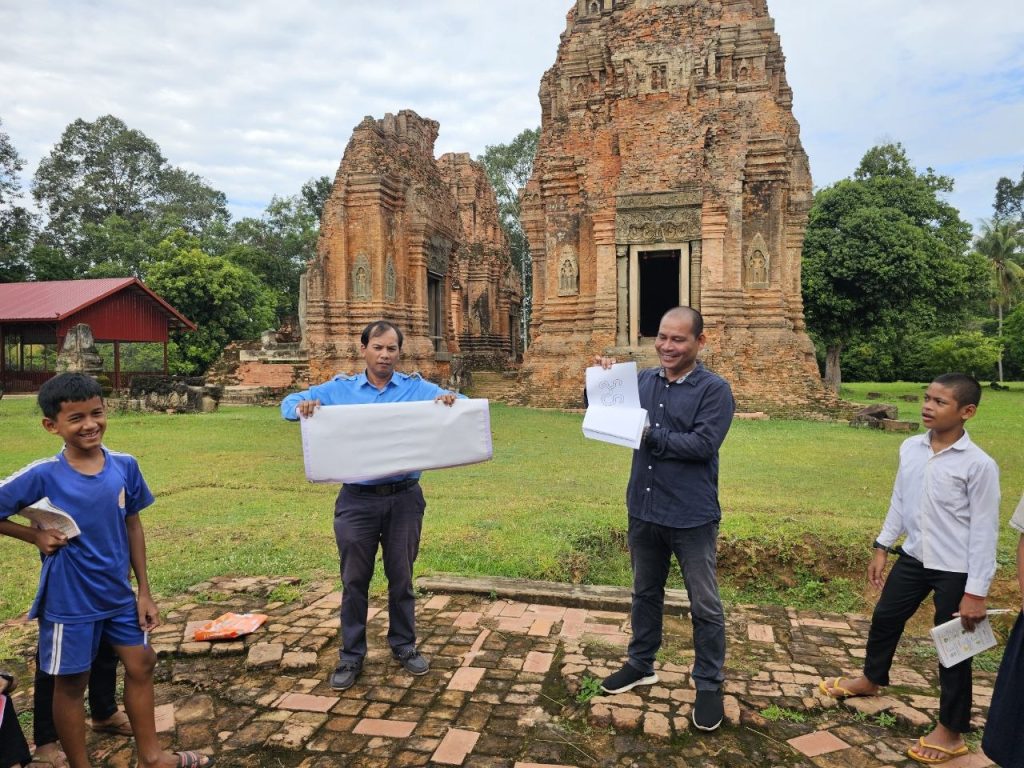
កាលពីថ្ងៃទី១២ ខែសីហា ឆ្នាំ២០២៦ ក្រុមការងារអប់រំបេតិកភណ្ឌ នៃអាជ្ញាធរជាតិអប្សរា បានដឹកនាំលោកគ្រូ និងសិស្សានុសិស្សថ្នាក់ទី៥ និងទី៦ ចំនួន ៧២នាក់ មកពីសាលាបឋមសិក្សាលលៃ ចុះធ្វើកម្មសិក្សាផ្ទាល់នៅទីតាំងប្រាសាទលលៃ ដើម្បីសិក្សាឈ្វេងយល់អំពីកំណើត និងប្រវត្តិនៃអក្សរខ្មែរបុរាណដែលបានចារលើជញ្ជាំងថ្មប្រាសាទ។
កម្មវិធីនេះ សម្របសម្រួលដោយគ្រូបង្គោលនៃអាជ្ញាធរជាតិអប្សរាចំនួន ៦រូប ក្នុងគោលបំណង បណ្ដុះស្មារតីសិស្សានុសិស្សចាប់ពីកម្រិតបឋមសិក្សា ឱ្យស្គាល់ពីប្រវត្តិអក្សរសាស្ត្រជាតិ បង្កើនក្ដីស្រឡាញ់ចំពោះមត៌កដូនតា និងយល់ដឹងពីតម្លៃនៃការអភិរក្សបេតិកភណ្ឌ។
នៅក្នុងវគ្គសិក្សាក្រៅថ្នាក់នេះ សិស្សានុសិស្សបានចូលរួមយ៉ាងសកម្មក្នុងសកម្មភាពអប់រំសំខាន់ៗ រួមមាន៖
– ការស្វែងយល់ប្រវត្តិសាស្ត្រ និងផែនទីបុរាណវិទ្យា៖ ទទួលបានការបង្ហាញអំពីប្រវត្តិទូទៅនៃអក្សរខ្មែរ ប្រវត្តិសង្ខេបនៃប្រាសាទលលៃ និងរបៀបមើលផែនទីបង្ហាញទីតាំងមត៌កដូនតាដែលនៅជុំវិញភូមិដ្ឋានផ្ទាល់របស់សិស្ស ក្នុងតំបន់ប្រាសាទរលួស។
– ការសង្កេតតួអក្សរបុរាណលើថ្ម៖ សិស្សានុសិស្សបានមើលតួអក្សរខ្មែរបុរាណដែលចារលើមេទ្វារប្រាសាទដោយផ្ទាល់។ ជាមួយគ្នានេះ ក្រុមការងារបានណែនាំយ៉ាងម៉ឺងម៉ាត់មិនឱ្យប៉ះពាល់ ឬស្ទាបសិលាចារឹកឡើយ ដើម្បីចូលរួមថែរក្សាសិលាចារឹកឱ្យបានត្រឹមត្រូវ។
– សកម្មភាពផាត់ពណ៌រំលឹកការចងចាំ៖ សិស្សនីមួយៗបានផាត់ពណ៌តួអក្សរបុរាណលើក្រដាសតាមគំរូដើម។ ស្នាដៃផាត់ពណ៌ទាំងនេះ ត្រូវបានប្រគល់ជូនសិស្សានុសិស្សទុកជាអនុស្សាវរីយ៍ និងជានិមិត្តរូបនៃចំណេះដឹង។
កម្មវិធីអប់រំបេតិកភណ្ឌរបស់អាជ្ញាធរជាតិអប្សរា ត្រូវបានរៀបចំឡើងជារៀងរាល់ឆ្នាំពេញមួយឆ្នាំសិក្សា ដោយបានសហការជាមួយអង្គការមត៌កខ្មែរ (KHO)។ ប៉ុន្តែសម្រាប់ឆ្នាំនេះ មានការបន្ថែមមុខវិជ្ជាថ្មីមួយគឺ «សិលាចារឹក»។ តាមរយៈមុខវិជ្ជាថ្មីនេះ កុមារាកុមារីមិនត្រឹមតែបានស្គាល់ទម្រង់តួអក្សរបុរាណប៉ុណ្ណោះទេ ថែមទាំងអាចប្រកបតួអក្សរទាំងនោះបានខ្លះៗ ដោយក្តីរីករាយ និងសភាវគតិរហ័សរហួន។
តំណាងលោកគ្រូអ្នកគ្រូសាលាបឋមសិក្សាលលៃ បានសម្តែងក្តីរំភើបជាពន់ពេកចំពោះលទ្ធផលនៃមុខវិជ្ជាថ្មីនេះ ដែលបានផ្តល់ទាំងចំណេះដឹង និងបរិយាកាសសិក្សាដ៏សប្បាយរីករាយ។
អាជ្ញាធរជាតិអប្សរាមានគោលដៅយ៉ាងមុតមាំថា សកម្មភាពអប់រំនេះ នឹងជួយបណ្ដុះស្មារតីស្នេហាជាតិ រួមចំណែកថែរក្សាសម្បត្តិមត៌កដូនតា ហើយសង្ឃឹមយ៉ាងមុតមាំថា កុមារទាំងនេះ យ៉ាងហោចណាស់ម្នាក់ នឹងក្លាយជាអ្នកបន្តវេនក្នុងកិច្ចការងារអភិរក្សបេតិកភណ្ឌជាតិ ឬបន្តការសិក្សានៅមហាវិទ្យាល័យបុរាណវិទ្យា នាពេលអនាគត៕
On the morning of August 12, 2026, the APSARA National Authority’s Heritage Education Team led 72 teachers and Grade 5 and 6 students from Lolei Primary School on an educational field trip to Lolei Temple. The students learned about the origins and history of ancient Khmer script inscribed on the temple’s stone walls.
Coordinated by six APSARA National Authority trainers, the program aimed to introduce students to Cambodia’s literary heritage from an early age, foster appreciation for their ancestors’ heritage, and raise awareness of the importance of heritage conservation.
During the extracurricular lesson, students participated in several educational activities, including:
Learning about history and archaeological maps: Students received an introduction to the history of Khmer script, an overview of Lolei Temple, and guidance on reading maps showing heritage sites around their villages in the Roluos area.
Observing ancient Khmer inscriptions: Students directly observed ancient Khmer characters engraved on the temple gate. They were also reminded not to touch the inscriptions as part of responsible heritage preservation.
Coloring ancient characters: Students colored ancient Khmer characters on paper based on original models. The finished works were given to them as souvenirs and reminders of what they had learned.
The APSARA National Authority organizes its heritage education program throughout the school year in collaboration with the Khmer Heritage Organization (KHO). This year, the program introduced a new subject on “Inscriptions.” Through this activity, students learned to recognize ancient Khmer characters and even practiced spelling some of them in an enjoyable and engaging way.
Teachers from Lolei Primary School expressed their enthusiasm for the new subject, noting that it provided students with valuable knowledge while creating a fun and memorable learning experience.
The APSARA National Authority hopes that these activities will inspire students to develop a strong appreciation for their national heritage, contribute to the preservation of their ancestors’ legacy, and encourage future generations to pursue careers in heritage conservation—including, perhaps, becoming archaeologists and continuing their studies in archaeology.


