
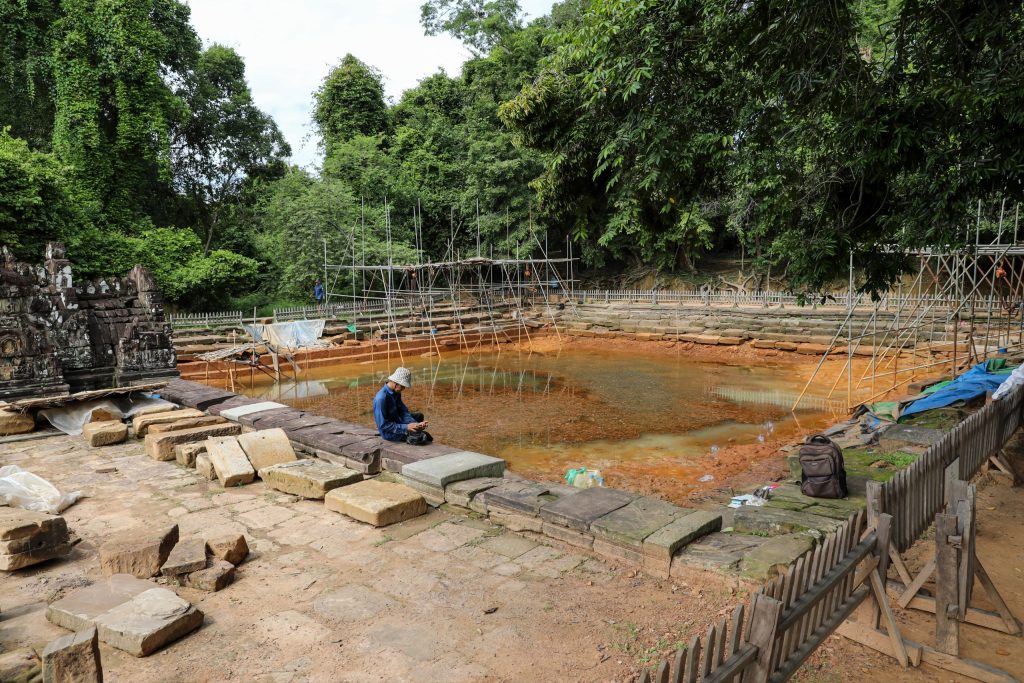
ក្រុមការងារនាយកដ្ឋានអភិរក្សប្រាសាទ និងបុរាណវិទ្យា នៃអាជ្ញាធរជាតិអប្សរា កំពុងបន្តជួសជុលស្រះទឹកខាងលិចប្រាសាទនាគព័ន្ធ ក្នុងដំណាក់កាលទី២ ដើម្បីលើកតម្លៃស្រះនេះឱ្យមានសោភ័ណភាពឡើងវិញ។
លោក អ៉ិត ស្រេង បុគ្គលិកបច្ចេកទេសនៃអាជ្ញាធរជាតិអប្សរាបានឱ្យដឹងថា គម្រោងនេះបានចាប់ផ្តើមពីខែមិថុនា មក។ គម្រោងបន្តជួសជុលកាំជណ្តើរខាងជើង និងជណ្តើរខាងត្បូង ខណៈដែលដំណាក់កាលទី១ បានជួសជុលជណ្តើរខាងកើត នៃស្រះខាងលិចប្រាសាទនាគព័ន្ធ។
ចំពោះស្ថានភាពនៃការខូចខាត លោក អ៉ិត ស្រេង បានរៀបរាប់ថា គឺដោយសារកត្តាធម្មជាតិ និងកត្តាអាយុកាល។ ទឹកភ្លៀងជាមូលហេតុចម្បងដែលបានហូរច្រោះច្រាំងស្រះ ដែលបណ្តាលឱ្យថ្មស្រុត រលុះធ្លាក់ចូលទឹកស្រះ រហូតធ្វើឱ្យថ្មទាំងនោះពុកផុយ ដែលភាគច្រើនពិបាកយកមកជួសជុលប្រើប្រាស់ឡើងវិញ។
គិតត្រឹមពាក់កណ្តាលខែសីហា ឆ្នាំ២០២៦ គម្រោងជួសជុលនេះបានរៀបចំគ្រឹះកាំថ្មបាយក្រៀមបានចំនួន២កាំ និងបន្តរៀបថ្មភក់កាំទី៥ដែលជាថ្មភក់។ លោក អ៉ិត ស្រេង បានបញ្ជាក់ថា កាំជណ្តើរស្រះខាងលិចប្រាសាទនាគព័ន្ធ មានចំនួន៧កាំ គឺកាំគ្រឹះថ្មបាយក្រៀមចំនួន២ និង៥កាំទៀតជាថ្មភក់។
គួររំឭកដែរថា មុននឹងដំណើរការជួសជុលស្រះទឹកខាងលិចប្រាសាទនាគព័ន្ធ គឺក្រុមការងារនៃនាយកដ្ឋានអភិរក្សប្រាសាទ និងបុរាណវិទ្យា ត្រូវការដឹកជញ្ជូនថ្មពីច្រាំងបារាយណ៍ជយតដាក ឬបារាយណ៍នាគព័ន្ធ។ ក្រុមការងារបានប្រើទូកជាមធ្យោបាយដឹកថ្ម១ដុំៗដោយមានការលំបាក និងត្រូវការបច្ចេកទេសខ្ពស់៕
អត្ថបទ៖ នាង សំណាង
រូបភាព៖ ស៊ិន ប្រណី
The APSARA National Authority’s Department of Conservation of Monuments and Preventive Archaeology is continuing the second phase of restoration of the west pond at Neak Poan Temple to preserve the site and enhance the pond’s appearance.
Mr. Ith Sreng, a technical staff member of the APSARA National Authority, said the project began in June 2026. The current phase focuses on restoring the northern and southern steps, following the first phase, which restored the eastern steps of the west pond.
According to Mr. Ith Sreng, the pond has deteriorated due to natural and age-related factors. Rainwater has eroded the pond embankments, causing stones to fall into the water and deteriorate. Many of the damaged stones are difficult to restore and reuse.
As of mid-August 2026, the restoration team had completed two layers of laterite foundations and continued installing the fifth layer of sandstone. The steps of the west pond consist of seven layers in total—two layers of laterite and five layers of sandstone.
Before restoration began, the team had to transport sandstone and laterite from the shores of the Neak Poan Baray. The stones were transported one by one by boat, making the work challenging and requiring careful technical methods.
Article by: Neang Samnang
Photos by: Sin Broney
Translation by: Net Phirun


