
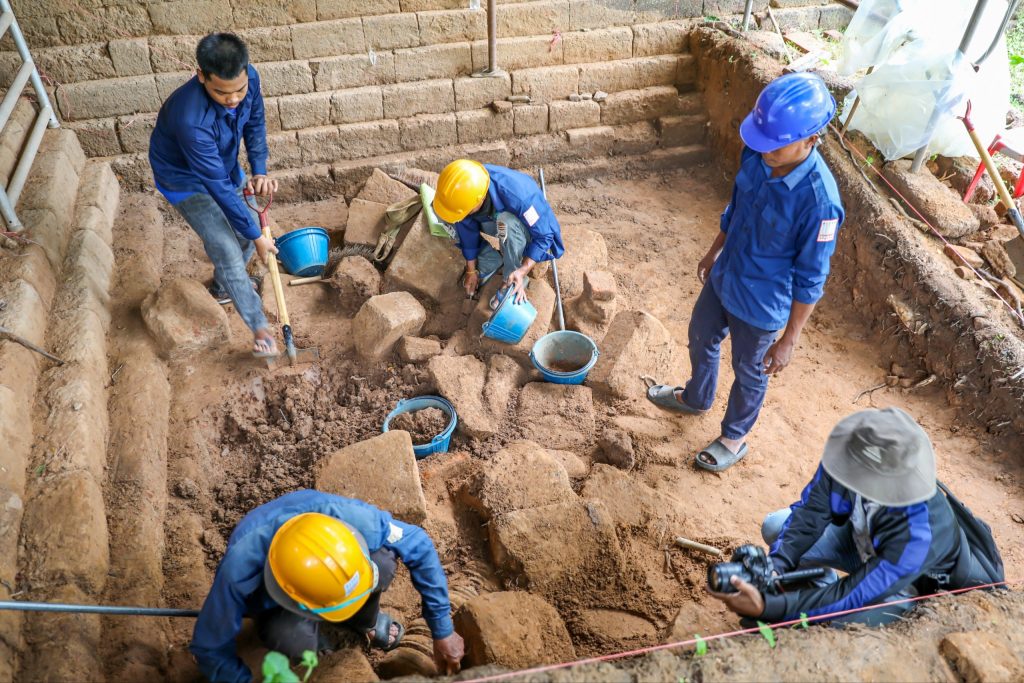
ក្រុមអ្នកជំនាញនៃអាជ្ញាធរជាតិអប្សរា កំពុងដំណើរការធ្វើកំណាយស្រាវជ្រាវបុរាណវិទ្យា នៅតាមបណ្តោយផ្លូវចូលឆ្លងកសិន្ធុខាងលិច នៃប្រាសាទបាគង ដើម្បីប្រមូលទិន្នន័យបច្ចេកទេស និងសិក្សាពីស្ថានភាពខូចខាត នៃរចនាសម្ព័ន្ធទាំងមូល មុននឹងឈានទៅអនុវត្តគម្រោងជួសជុល និងពង្រឹងសោភ័ណភាពស្ពានហាលនេះឡើងវិញ។
លោក សារាយ គឹមហួល ប្រធានក្រុមអភិរក្សតំបន់រលួស នៃនាយកដ្ឋានអភិរក្សប្រាសាទ និងបុរាណវិទ្យា មានប្រសាសន៍ថា ផ្លូវចូលឆ្លងកសិន្ធុខាងលិចរបស់ប្រាសាទបាគង មានប្រវែង ៧០ម៉ែត្រ ទទឹង ១២ម៉ែត្រ និងកម្ពស់ ៤ម៉ែត្រ។ មុននឹងចាប់ផ្តើមការងារជួសជុលជាក់ស្តែង ក្រុមការងារចាំបាច់ត្រូវធ្វើកំណាយបុរាណវិទ្យាជាមុនសិន ដើម្បីសិក្សាស្វែងយល់ពីរចនាសម្ព័ន្ធដើមទាំងស្រុង ព្រមទាំងរករៀបចំប្រមូលបំណែកថ្មបាយក្រៀម និងចម្លាក់ដងខ្លួននាគ ដែលបានរលុះធ្លាក់ និងកប់នៅក្នុងកសិន្ធុ។
បច្ចុប្បន្ន រចនាសម្ព័ន្ធផ្លូវចូលនេះ បានរងការខូចខាតយ៉ាងធ្ងន់ធ្ងរ បន្ទាប់ពីឆ្លងកាត់កាលវេលាជាង ១,០០០ ឆ្នាំ។ ជញ្ជាំងទប់តួថ្នល់ធ្វើអំពីថ្មបាយក្រៀមទាំងសងខាង បានរលុះធ្លាក់ស្ទើរតែទាំងស្រុង។ រីឯ ចម្លាក់ដងខ្លួននាគអមសងខាងផ្លូវ ក៏បានបាត់បង់ពីទីតាំងដើមភាគច្រើនផងដែរ។ កត្តាចម្បង ដែលបណ្តាលឱ្យមានការខូចខាតនេះ គឺបណ្តាលមកពីការដើមឈើដុះចាក់ឫសរីកសាយភាយ និងការហូរច្រោះដីដោយសារទឹកភ្លៀងជារៀងរាល់រដូវវស្សា។
លោកបណ្ឌិត ជា សុជាតិ បុរាណវិទូ និងជាអ្នកទទួលបន្ទុកការងារកំណាយនៅទីតាំងនេះ បានបញ្ជាក់ថា ផ្លូវចូលឆ្លងកសិន្ធុខាងលិចប្រាសាទបាគង ពុំធ្លាប់មានប្រវត្តិ នៃការសិក្សាស្រាវជ្រាវបុរាណវិទ្យា ឬជួសជុលនាពេលកន្លងមកនោះឡើយ។ ហេតុនេះ ការធ្វើកំណាយនាពេលនេះ គឺមានសារសំខាន់បំផុតក្នុងការប្រមូលទិន្នន័យឱ្យបានគ្រប់ជ្រុងជ្រោយ ស្របតាមអនុសាសន៍ និងបទដ្ឋានបច្ចេកទេសរបស់គណៈកម្មាធិការអន្តរជាតិ ដើម្បីសម្របសម្រួលកិច្ចគាំពារ និងអភិវឌ្ឍន៍រមណីយដ្ឋានប្រវត្តិសាស្ត្រអង្គរ និងសំបូរព្រៃគុក។
ក្រុមការងារបានរៀបចំផែនការសកម្មភាព និងបច្ចេកទេសនៃកំណាយ ដោយកំណត់ទីតាំងកំណាយក្នុងជំហានដំបូងយក៤រួមមាន៖ ជ្រុងឦសាន ជ្រុងអាគ្នេយ៍ ជ្រុងនិរតី និងជ្រុងពាយ័ព្យ។ បន្ទាប់មក នឹងបន្តធ្វើកំណាយនៅចំណុចកណ្តាល និងភាគខាងលិចនៃស្ពានហាល។ កំណាយនេះ មានគោលបំណងសិក្សាពី៖ ទី១ រចនាសម្ព័ន្ធគ្រឹះនៃផ្លូវចូល កម្រាស់ជញ្ជាំងទប់ថ្មបាយក្រៀម និងបច្ចេកទេសបុកបង្ហាប់ដីក្នុងតួផ្លូវ។ ទី២ ពិនិត្យទំនាក់ទំនងរចនាសម្ព័ន្ធរវាងផ្លូវចូល ជាមួយកាំជណ្តើរចុះកសិន្ធុ និងដំណាក់កាលផ្សេងៗនៃការសាងសង់។ ទី៣ ស្រាវជ្រាវផ្នែកខាងលើនៃតួផ្លូវ ថាជាកម្រាលរៀបដោយថ្មភក់ ថ្មបាយក្រៀម ឬត្រឹមជាដីបុកបង្ហាប់ ដោយសារបច្ចុប្បន្នពុំមានសល់ស្លាកស្នាមច្បាស់លាស់ និងចុងក្រោយស្វែងរក និងស្រង់យកបំណែកថ្មបាយក្រៀម ព្រមទាំងចម្លាក់ដងខ្លួននាគ និងចម្លាក់គ្រុឌចំនួន ២ (ដែលធ្លាប់ឈរអមសងខាងកន្ទុយនាគនៅទិសខាងកើតស្ពានហាល ហើយបច្ចុប្បន្នសល់តែជើងទម្រ) ដើម្បីយកមកផ្គុំ និងប្រគល់ទីតាំងដើមវិញ៕
អត្ថបទ៖ ឆាយ ផាន់នី
រូបភាព៖ ស៊ិន ប្រណី
A team of experts from the APSARA National Authority is conducting archaeological excavations along the western causeway of Bakong Temple to collect technical data and assess the condition of the structure before undertaking a restoration project aimed at preserving and enhancing this important architectural feature.
Mr. Saray Kimhual, Head of the Restoration Team of the Department of Conservation of Monuments and Preventive Archaeology, explained that the western causeway measures 70 meters in length, 12 meters in width, and approximately 4 meters in height. Before restoration can begin, the team must first carry out archaeological excavations to study the original construction of the causeway and recover broken sandstone blocks and fragments of the naga balustrades that have collapsed into and become buried beneath the surrounding moat.
Today, the causeway has suffered severe deterioration after more than 1,000 years. The laterite retaining walls on both sides have almost entirely collapsed, while the naga balustrades that once lined the causeway have disappeared from their original positions. The principal causes of this damage are the growth of large trees and soil erosion caused by seasonal rainfall.
Mr. Chea Socheat, the archaeologist leading the excavation, noted that the western causeway of Bakong Temple has never previously undergone archaeological investigation or restoration. Consequently, the current excavation is essential for collecting comprehensive archaeological and engineering data in accordance with the recommendations and technical standards of the ICC-Angkor/Sambor Prei Kuk.
The excavation team has developed a detailed action plan and technical methodology. During the initial phase, excavations will be carried out at four locations: the northeast, southeast, southwest, and northwest corners of the causeway. Subsequent excavations will continue in the central section and the western end of the bridge.
The excavation has four principal objectives:
1. To investigate the foundation of the causeway, determine the thickness of the laterite retaining walls, and study the ancient earth-compaction techniques used in its construction.
2. To examine the structural relationship between the causeway, the stairways leading down to the moat, and the different construction phases of the monument.
3. To determine whether the surface of the causeway was originally paved with sandstone, laterite, or compacted earth, as no clear evidence remains visible today.
4. To recover fallen architectural stones, fragments of the naga balustrades, and two sandstone sculptures that originally stood on either side of the naga’s tail at the eastern end of the causeway. Today, only their pedestals remain. These recovered elements will be conserved, reassembled where possible, and reinstated in their original locations.
Article by: Chhay Phanny
Photos by: Sin Broney
Translation by: Net Phirun


