
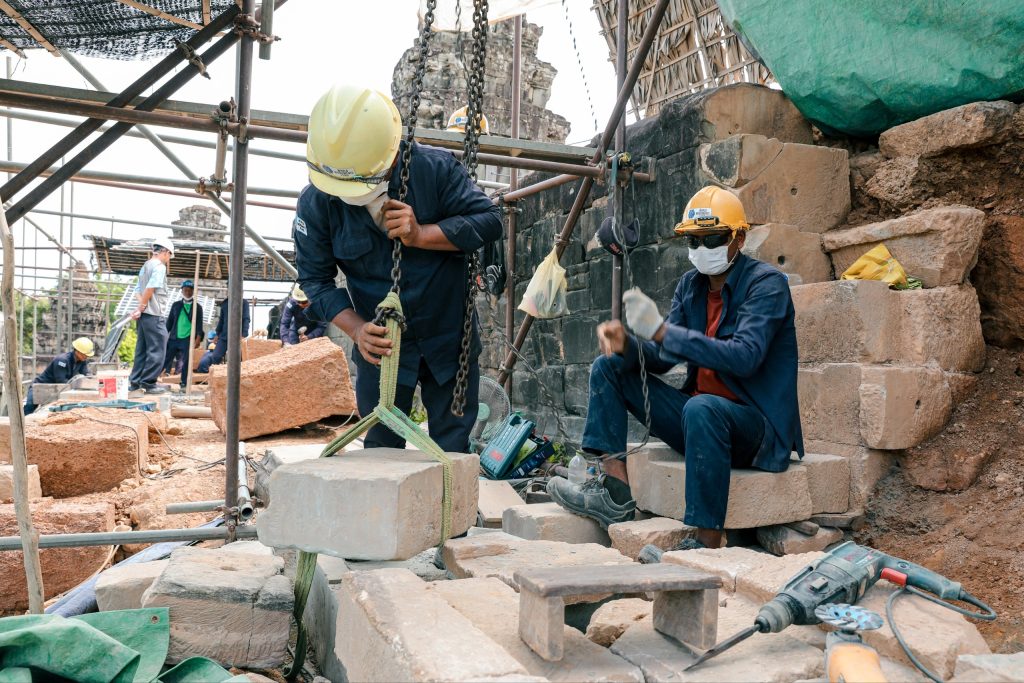
អង្គការមូលនិធិប្រាសាទពិភពលោក (WMF) សហការជាមួយអាជ្ញាធរជាតិអប្សរា កំពុងបន្តការងារជួសជុលប៉ែកខាងលិចប្រាសាទភ្នំបាខែង ដែលជាផ្នែកមួយដ៏សំខាន់នៃប្រាសាទភ្នំមួយនេះ។
លោក គង់ សាវបុត្រ នាយកប្រចាំប្រទេសអង្គការ WMF ឱ្យដឹងថា ប៉ែកខាងលិចប្រាសាទភ្នំបាខែង មានការខូចខាតប្រហាក់ប្រហែលនៅជ្រុងផ្សេងទៀតដែរ។ ក្រុមការងារបានពង្រឹង និងរៀបឡើងវិញនៅផ្នែកជញ្ជាំង កម្រាល ដោយជំនួសថ្មបាយក្រៀមថ្មីមួយចំនួននៅទីតាំងដែលពុកផុយ ឬរកថ្មមិនឃើញ។
លោក ជីវ ភិរម្យ វិស្វករគម្រោងជួសជុលប្រាសាទភ្នំបាខែង លើកឡើងថា គម្រោងជួសជុលនៅប៉ែកខាងលិចប្រាសាទភ្នំបាខែង បានចាប់ផ្តើមនៅក្នុងខែមីនា ឆ្នាំ២០២៦។ គម្រោងនេះក្រុមការងារបានរុះរើជញ្ជាំង កម្រាល និងប្រាសាទតូចចំនួន២ គឺC6 និង C7 (អក្សរCតំណាងឱ្យជាន់ទី៤ រាប់ពីខាងក្រោម) រួមនិងការងារជណ្តើរ។ គម្រោងនេះអនុវត្តដោយក្រុមការងារចំនួន១០ រួមមានផ្នែកជួសជុលពង្រឹងគ្រឹះ រៀបជញ្ជាំង និងជណ្តើរ។
ចំពោះបច្ចេកទេសនៃការជួសជុល លោក ភិរម្យ បានរៀបរាប់ថា មុននឹងឈានដល់ការជួសជុល ក្រុមការងារបានសិក្សាពីប្រព័ន្ធបង្ហូរទឹក បរិវេណប្រាសាទ ប្រភេទថ្មភ្នំ ក៏ដូចជាសិក្សាពីរចនាសម្ព័ន្ធ តួប្រាសាទទាំងមូល ដោយមានការគូរប្លង់បង្ហាញពីកត្តាខូចខាតជាដើម។ បន្ទាប់មកមានការសិក្សាបន្ថែមពីអ្នកជំនាញបច្ចេកទេសជាតិ និងអន្តរជាតិរបស់អាជ្ញាធរជាតិអប្សរា និងអង្គការ WMF មុននឹងយកគំរូប្លង់ជួសជុលឆ្លងយោបល់ទៅក្រុមអ្នកជំនាញការនៃគណៈកម្មាធិការអន្តរជាតិអាយស៊ីស៊ី-អង្គរ និងសំបូរព្រៃគុក ដើម្បីផ្តល់យោបល់បន្ថែមលើការងារអភិរក្ស។
លោក ភិរម្យ បានបន្ថែមថា ការជួសជុលចែកជាច្រើនផ្នែករួមមាន ការជួសជុលផ្នែកខាងក្នុងដែលត្រូវពង្រឹងថ្មភ្នំ ពង្រឹងគ្រឹះប្រសិនខូចខាត រៀបជញ្ជាំងឡើងវិញឱ្យត្រង់ រៀបចំប្រព័ន្ធទឹកនៅជាន់ទី៣។ ជាន់ទី៥ និងទី៧ បន្ថែមចង្កឹះកែវ ដើម្បីពង្រឹងពីថ្មភ្នំទៅក្រោយជញ្ជាំង ដើម្បីទប់លំនឹងកុំឱ្យផ្អៀង។ វិធីសាស្រ្តទី៦ បន្ថែមរន្ធទឹកនៅជាន់លើ បន្ថែមថ្មបាយក្រៀមចន្លោះថ្មភ្នំនិងជញ្ជាំង បន្ទាប់មកធ្វើជម្រាល ២-៣% ដើម្បីក្រាលកៅស៊ូការពារជម្រាបទឹក។
តាមការបង្ហាញរបស់អ្នកជំនាញ កត្តាដែលនាំឱ្យប្រាសាទភ្នំបាខែងមានការខូចខាត គឺកត្តាធម្មជាតិ ការទុកប្រាសាទចោលពុំមានការថែទាំកន្លងមក ដែលធ្វើឱ្យរុក្ខជាតិដុះចាក់ឫសតាមចន្លោះថ្ម ទឹកភ្លៀងហូរច្រោះ និងធ្វើឱ្យគ្រឹះពុកផុយជាដើម៕
អត្ថបទ៖ នាង សំណាង
រូបភាព៖ ស៊ិន ប្រណី
The World Monuments Fund (WMF), in collaboration with the APSARA National Authority, is continuing restoration work on the western section of Phnom Bakheng Temple, one of the most significant components of the temple complex.
Mr. Kong Savbot, WMF Country Director, explained that the western section of Phnom Bakheng has suffered damage similar to that found in other parts of the temple. Restoration efforts have focused on strengthening and reassembling walls and floors, while deteriorated or missing laterite blocks have been replaced where necessary.
According to Mr. Chiv Phirom, Project Engineer for the Phnom Bakheng restoration project, work on the western section began in March 2026. The restoration includes the reassembly of walls, floors, stairways, and two small shrines known as C6 and C7, located on the fourth level of the temple (the letter “C” designates this level). The project is being carried out by ten specialized teams responsible for foundation reinforcement, wall stabilization, stairway restoration, and other conservation activities.
Mr. Phirom noted that before restoration began, the team conducted extensive studies of the drainage system, temple terrain, stone materials, structural conditions, and overall architectural layout. Damage assessments were carefully documented, and restoration plans were developed in consultation with national and international technical experts from both the APSARA National Authority and WMF. A sample restoration proposal was subsequently submitted to experts of the International Coordinating Committee for the Safeguarding and Development of the Historic Sites of Angkor and Sambor Prei Kuk (ICC-Angkor/Sambor Prei Kuk) for further technical recommendations.
The restoration process has been divided into several phases. These include consolidating and strengthening deteriorated stone elements, reinforcing damaged foundations, realigning leaning walls, and improving the drainage system on the third level of the temple. On the fifth and seventh levels, fiberglass reinforcement rods have been installed behind the walls to increase structural stability and prevent further displacement. Additional measures include creating drainage outlets on upper levels, inserting laterite fill between natural bedrock and retaining walls, and constructing surfaces with a 2–3 percent slope to facilitate water runoff and prevent seepage.
Experts attribute the deterioration of Phnom Bakheng Temple to a combination of natural factors and long periods of neglect in the past. The absence of regular maintenance allowed vegetation to grow between stone joints, while rainwater infiltration gradually weakened foundations and accelerated structural decay.
Article by Neang Samnang
Photos by Sin Broney
Translation by Net Phirun