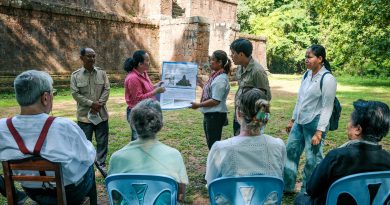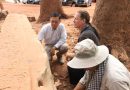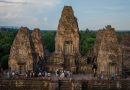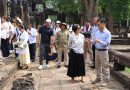
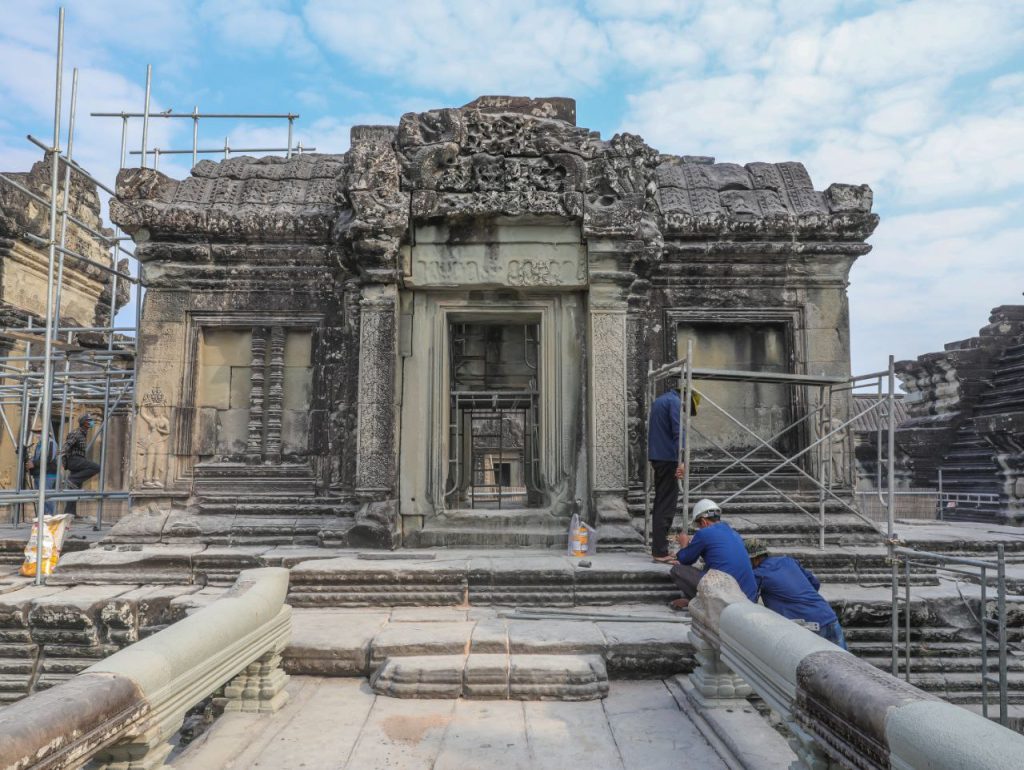
អាជ្ញាធរជាតិអប្សរាតាមរយៈក្រុមអភិរក្សថ្ម នៃនាយកដ្ឋានអភិរក្សប្រាសាទ និងបុរាណវិទ្យា កំពុងជួសជុលពង្រឹងថ្មនៅបណ្ណាល័យខាងជើង នៃជាន់ទី២ប្រាសាទអង្គរវត្ត ខណៈដែលថ្មទាំងនោះមានការពុកផុយ ប្រេះបែក ដោយសារកត្តាធម្មជាតិ និងអាយុកាល។
លោក សយ សុភារិន្ទ បុរាណវិទូនៃអាជ្ញាធរជាតិអប្សរា បានបញ្ជាក់ថា ការជួសជុលថ្មនេះផ្តោតលើការទប់ស្កាត់កុំឱ្យថ្មបន្តពុកផុយ បែកឬប្រេះបន្តទៀត ដែលអាចប៉ះពាល់ ឬធ្វើឱ្យបាត់បង់រូបរាង ក្បាច់ ចម្លាក់ ពិសេសរូបអប្សរា ប្រសិនបើពុំមានការព្យាបាលបានទាន់ពេលវេលានោះទេ។ អ្នកជំនាញបន្តថា ចំណុចដែលត្រូវជួសជុលរួមមាន ធ្នឹមដំបូល ធ្នឹមសសរ ស៊ុមទ្វារ ជញ្ជាំង និងកម្រាលថ្មដែលមានប្រហោង កន្លែងខ្លះ ត្រូវបានបិទភ្ជិតដោយបាយអដើម្បីការពារជម្រាបទឹក។
ការខូតខាតនៃថ្មប្រាសាទបុរាណ តួយ៉ាងនៅប្រាសាទអង្គរវត្តជាដើម មានកត្តាចម្បងៗមួយចំនួនរួមមាន កត្តាធម្មជាតិ អាយុកាលនៃថ្ម ដែលធ្វើឱ្យថ្មពុកផុយ ផ្ទាត់ របេះ ឬប្រេះជាដើម។ ដើម្បីជួសជុល អភិរក្ស និងទប់ស្កាត់ការខូចខាតទាំងនេះ អ្នកជំនាញនៃអាជ្ញាធរជាតិអប្សរា បានព្យាបាលដោយដំបូងត្រូវដកជាតិអំបិល ឬជាតិអាស៊ីត បន្ទាប់មកពង្រឹងសាច់ថ្មដើម្បីឱ្យវាមានភាពរឹងមាំឡើងវិញ និងបិទបាយអតាមស្នាមប្រេះ ការពារកុំឱ្យទឹកភ្លៀងជ្រាបចូល។
បើតាមការបញ្ជាក់ថាពីលោក សយ សុភារិន្ទ កន្លងមកក្រុមការងាររបស់លោកធ្លាប់ព្យាបាល និងអភិរក្សថ្មមួយចំនួននៅបរិវេណប្រាសាទអង្គរវត្ត ដូចជា ជួសជុលជើងសសរពុកផុយចំនួន ១០ដើម និងព្រះពុទ្ធរូបទាំងបួនអង្គ នៅជាន់បាកាន ជួសជុលជើងសសរនៅជាន់ព្រះពាន់ជាង ៣០ និងជួសជុលចម្រឹងបង្អួចមួយចំនួននៅជិតលោកតារាជ ជាដើម៕
អត្ថបទ៖ នាង សំណាង
រូបភាព៖ សុិន ប្រណី
APSARA National Authority, through the Stone Conservation Team of the Department of Conservation of Monuments and Preventive Archaeology, is carrying out restoration and strengthening work on deteriorated stones at the North Library on the second level of Angkor Wat Temple. The stones have suffered decay, cracking, and splitting due to natural factors and the passage of time.
Mr. Soy Sophearin, an archaeologist at the APSARA National Authority, explained that the restoration focuses on preventing further deterioration that could affect or damage the temple’s original appearance, architectural style, and sculptural elements—particularly the delicate Apsara bas-reliefs—if not treated in a timely manner.
He added that the restoration work covers key structural components, including roof beams, pillar beams, door frames, walls, and stone floors with holes or cracks. Some damaged areas are sealed with mortar to prevent rainwater from seeping into the structure and accelerating deterioration.
According to Mr. Soy Sophearin, damage to ancient temple stones at Angkor Wat is mainly caused by natural environmental conditions and the age of the materials, leading to decay, cracking, and splitting. To address these issues, conservation experts first clean the stones by removing salt and acidic substances, then strengthen weakened areas and seal cracks with mortar to protect them from further water infiltration.
He also noted that the Stone Conservation Team has previously restored and preserved many parts of Angkor Wat, including 10 decayed pillars and four Buddha statues at the Bagan tower, more than 30 pillars at the Preah Poan gallery, and several window frames near the west gate (Ta Reach), among others.
Article by Neang Samnang
Photos by Sin Broney
Translation by Net Phirun