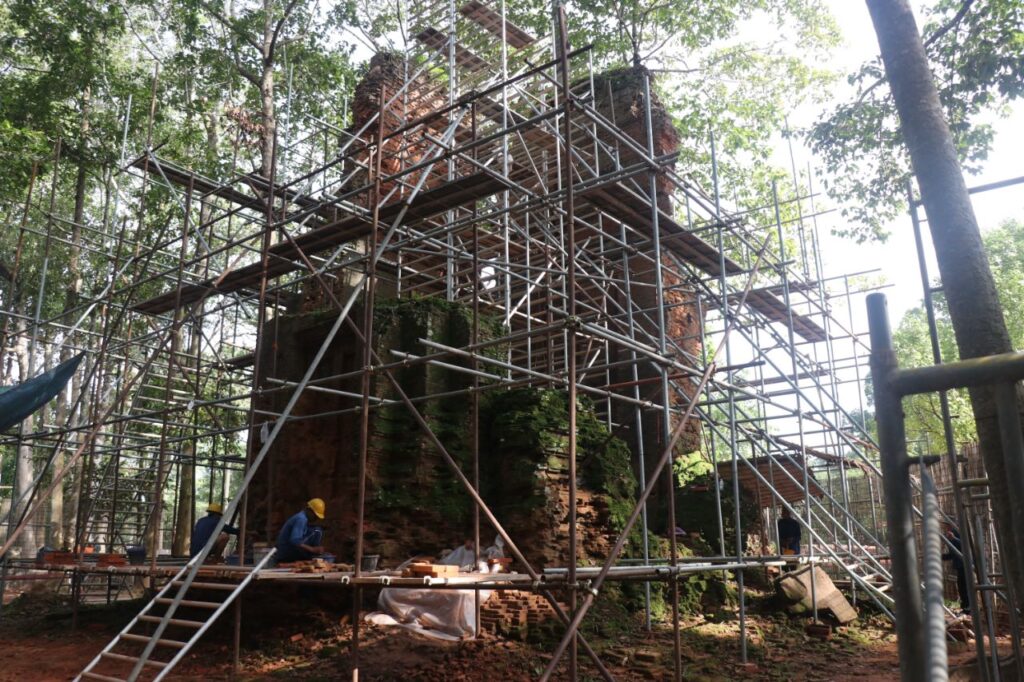
អ្នកជំនាញនៃអាជ្ញាធរជាតិអប្សរា កំពុងជួសជុល និងពង្រឹងប្រាសាទឥដ្ឋ ប្រាង្គទី៩ ក្នុងកំពែងទី៣នៃប្រាសាទបាគង បន្ទាប់ពីពិនិត្យឃើញប្រាង្គប្រាសាទឥដ្ឋនេះ មានភាពខូចខាតធ្ងន់ធ្ងរ រចនាសម្ពន្ធប្រាង្គទាំងមូលទ្រុឌទ្រោមខ្លាំង គ្រឹះស្រុតនិងជញ្ជាំងប្រេះហែក ដែលមានហានិភ័យខ្ពស់ដល់ភ្ញៀវទេសចរ។
លោក សារាយ គឹមហួល ប្រធានក្រុមអភិរក្សតំបន់រលួស នៃនាយកដ្ឋានអភិរក្សប្រាសាទ និងបុរាណវិទ្យារបស់អាជ្ញាធរជាតិអប្សរា បានឱ្យដឹងថា គម្រោងនេះបានចាប់ផ្តើមតាំងពីអំឡុងខែឧសភាឆ្នាំ២០២៥មក គឺក្រុមអ្នកជំនាញបានធ្វើការជួសជុលពង្រឹងប្រាសាទឥដ្ឋប្រាង្គទី៩ ក្នុងកំពែងទី៣នៃប្រាសាទបាគងនេះឡើងវិញ។ លោកជម្រាបជូនថា រចនាសម្ពន្ធប្រាសាទឥដ្ឋនេះ បានខូចខាតយ៉ាងធ្ងន់ធ្ងរ ជញ្ជាំងប្រាសាទបានហែកជា៤បំណែកធំៗ ប្រឈមនឹងហានិភ័យខ្ពស់ ដោយសារកត្តាពេលវេលា សំណង់មានសភាពចាស់ជរា ទ្រុឌទ្រោមខ្លាំង និង ប្រឈមការប្រែប្រួលអាកាសធាតុជាដើម។ល។ ដូច្នេះអ្នកជំនាញបានធ្វើការទល់ទ្រ នៅជញ្ជាំងផ្នែកខាងលិច និងខាងជើង។ ចំណែកផ្នែកខាងក្នុងនៃប្រាសាទ ត្រូវធ្វើឆ្អឹងដែក ដើម្បីពង្រឹងរចនាសម្ពន្ធប្រាង្គ ដែលនៅសេសសល់ឱ្យរឹងមាំឡើងវិញ ក្រៅពីនេះក៏ចាប់ផ្តើមជួសជុលពង្រឹងគ្រឹះ និងជញ្ជាំងដែលប្រេះហែក និងពុកផុយឱ្យរឹងមាំឡើងវិញ ។ បច្ចេកទេសគឺដាប់យកឥដ្ឋ ដែលខូចគុណភាពចេញ រួចរៀបជំនួសវិញ នូវឥដ្ឋថ្មីដែលមានគុណភាពល្អ អាចទ្រទ្រង់ជញ្ជាំងបន្តទៀតបាន។
មកដល់បច្ចុប្បន្នកិច្ចការជួសជុលសម្រេចបានលទ្ធផល៣៥ភាគរយហើយ ដោយបានបែងចែកការងារជាពីរដំណាក់ គឺដំណាក់កាលទី១ ពង្រឹងទល់ទ្រជញ្ជាំងផ្នែកខាងលិច និងរៀបចំជាឆ្អឹងដែកផ្នែកខាងក្នុង។ បន្ទាប់មកដំណាក់កាលទី២ គឺការជួសជុលជញ្ជាំងឥដ្ឋ។ អ្នកជំនាញរំពឹងថា ការជួសជុលប្រាសាទនេះ អាចនិងបញ្ចប់នៅចុងឆ្នាំ២០២៥ខាងមុខ។
សូមជម្រាបថា ប្រាសាទឥដ្ឋ ព័ទ្ធជុំវិញកសិន្ធុប្រាសាទបាគង មានសរុបចំនួន២២ប្រាសាទ ដោយប្រាសាទខ្លះ បានរងការខូចខាតស្ទើតែមិនសេសសល់រូបរាង។ ចំណែកប្រាសាទដែលនៅមានរូបរាង អាជ្ញាធរជាតិអប្សរាបានថែទាំ អភិរក្សជាបន្តបន្ទាប់ ដើម្បីថែរក្សាមរតកបេតិកភណ្ឌជាតិ ឱ្យបានគង់វង្សសម្រាប់មនុស្សជាតិ។ ជាក់ស្តែងកន្លងមកអាជ្ញាធរជាតិអប្សរា បានជួសជុលប្រាសាទឥដ្ឋចំនួន៧ ជញ្ជាំងខឿនថ្មភក់ចំនួន១ ជួសជុលតោនិងកម្រាលចំនួន១ ជួសជុលពង្រឹងដំរីនិងកម្រាលចំនួន១ ជួសជុលបង្គោលសីមា ផ្លូវចូលខាងកើត និងពង្រឹងការពារបណ្តោះអាសន្នចំនួន៤ទីតាំងទៀត នៅជុំវិញប្រាសាទបាគង៕
អត្ថបទ៖ការិយាល័យផ្សព្វផ្សាយ
រូបភាព៖លោក ភោគ ជា និងលោក ស៊ិន ប្រណី
The APSARA National Authority is currently engaged in the restoration of the 9th brick temple located in the third enclosure of the Bakong Temple complex. This initiative follows a detailed inspection that reveals significant damage to the temple’s structure, including cracked foundations and walls, which poses a considerable risk to visitors.
According to Mr. Saray Kimhual, head of the Roluos Conservation Team, restoration efforts commenced in May 2025. The temple has suffered extensive deterioration, with its walls split into four large sections. Factors contributing to this decay include age, environmental exposure, and the effects of climate change. To address these issues, experts are focusing on reinforcing the western and northern walls, as well as the interior structure with steel supports.
The restoration process includes repairing the foundation and walls that have become cracked and decayed. Damaged bricks are being replaced with high-quality new bricks capable of providing adequate support for the structure. As of now, the restoration work is approximately 35% complete, divided into two phases: Phase 1 involves strengthening the western wall and preparing the internal steel framework, while Phase 2 focuses on restoring the brick walls. The team anticipates that the restoration will be finalized by the end of 2025.
The Bakong Temple complex is home to a total of 22 brick temples, many of which are in varying states of disrepair. The APSARA National Authority is committed to maintaining and preserving these sites to protect national heritage for future generations. To date, they have successfully restored seven brick temples, along with a sandstone wall, a lion statue, an elephant statue, boundary stones, and the eastern entrance, while also providing temporary protection at four additional locations around Bakong Temple.
Article by the Office of Communication
Photos by Phouk Chea /Sin Broney
Translation by Net Phirun