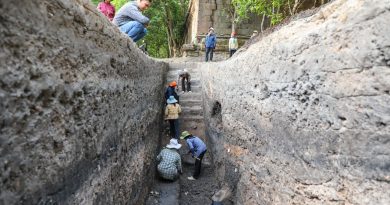
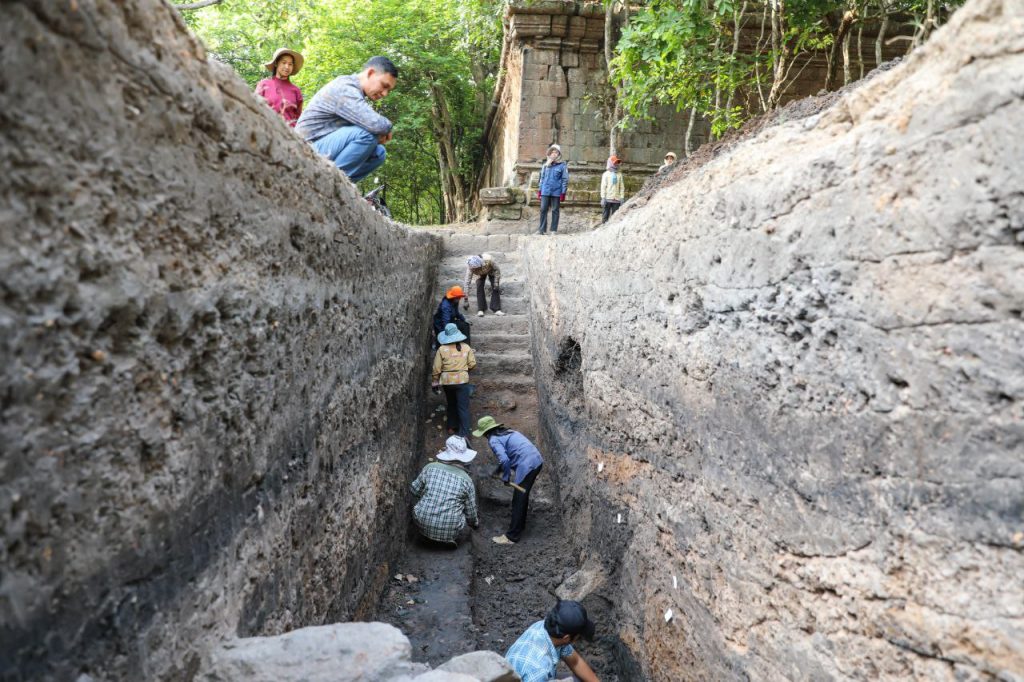
ក្រុមការងារបុរាណវិទ្យារបស់អាជ្ញាធរជាតិអប្សរា ធ្វើកំណាយស្រាវជ្រាវនៅខាងក្រៅកំពែងអតីតព្រះបរមរាជវាំងនៃក្រុងអង្គរធំ អស់រយៈពេល១ខែមកហើយ។ ការធ្វើកំណាយស្រាវជ្រាវនេះ ក្នុងគោលបំណងសិក្សាទីតាំង ដែលមានស្លាកស្នាមជាកសិន្ធុទឹក និងប្រព័ន្ធបង្ហូរទឹកសម័យបុរាណដើម្បីរំដោះទឹកចេញពីក្នុងបរិវេណព្រះបរមរាជវាំង ហូរចូលក្នុងកសិន្ធុ។
លោក ស្រ៊ុន តិច បុរាណវិទូនៃអាជ្ញាធរជាតិអប្សរា ឱ្យដឹងថា លទ្ធផលជាបឋម នៃការធ្វើកំណាយចំនួន៤ទីតាំង ដើម្បីសិក្សាពីរចនាសម្ពន្ធកសិន្ធុទឹកនៅខាងក្រៅកំពែងជុំវិញព្រះបរមរាជវាំង គឺមានកំណកដីចាក់បង្គររហូតដល់ជម្រៅ៣ម៉ែត្រ ហើយរចនាសម្ពន្ធកសិន្ធុមានកាំសាងពីថ្មបាយក្រៀមមានចំនួនពី៩ រហូតដល់១១កាំ និងរកឃើញប្រព័ន្ធបង្ហូរទឹកបុរាណចំនួន៣ទីតាំងស្ថិតនៅតាមជើងកំពែង ដែលប្រព័ន្ធបង្ហូរទឹកនេះមានតួនាទីរំដោះទឹកចេញពីបរិវេណព្រះបរមរាជវាំងហូរចូលកសិន្ធុនាសម័យបុរាណ និងរកឃើញស្លាកស្នាមស្រះបុរាណមួយនៅទិសខាងជើងព្រះបរមរាជវាំង ផ្នែកខាងក្រៅកំពែង មានកាំធ្វើពីថ្មបាយក្រៀមចំនួន១៥កាំទៀតផង។ ចំណែក ទិសខាងលិចនៃស្រះមានចម្លាក់យ៉ាងប្រណិត។
បុរាណវិទូរូបនេះ បញ្ជាក់ថា ប្រព័ន្ធបង្ហូរទឹក និងកសិន្ធុទឹកនៅជុំវិញកំពែងអតីតព្រះបរមរាជវាំងក្រុងអង្គរធំ ត្រូវកប់បាត់ដោយកំណកដី និងដើមឈើ ដោយកត្តាពេលវេលា មនុស្ស និងការប្រែប្រួលអាកាសធាតុ។ ការធ្វើកំណាយស្រាវជ្រាវនេះ ក៏នឹងផ្តល់លទ្ធភាពដល់អាជ្ញាធរជាតិអប្សរា រៀបចំប្រព័ន្ធរំដោះទឹកបុរាណឱ្យមានតួនាទីដើមឡើងវិញ ដើម្បីរំដោះទឹកចេញពីខាងក្នុងបរិវេណអតីតព្រះបរមរាជវាំង ដែលជារៀងរាល់ឆ្នាំនៅរដូវវស្សាមានទឹកដក់ជាប្រចាំ ដែលបណ្តាលមកពីប្រព័ន្ធបង្ហូរទឹកទាំងនោះ ត្រូវបានខូចខាតធ្ងន់ធ្ងរ អស់រយៈពេលរាប់រយឆ្នាំមកហើយ៕
អត្ថបទ: យី សុថា
រូបភាព: ស៊ិន ប្រណី
An archaeological team from the APSARA National Authority has been conducting a month-long research study outside the walls of the former Royal Palace of Angkor Thom. The study aims to investigate the structural remains of the ancient moat and the drainage system that once channeled water from the Royal Palace to the exterior and into the surrounding moat.
Mr. Srun Tech, an archaeologist with the APSARA National Authority, reported that preliminary excavation results from four sites reveal significant findings. The team discovered soil deposits reaching a depth of up to three meters. The moat structure itself consists of 9 to 11 laterite steps, indicating a carefully engineered design.
In addition, three ancient drainage systems were uncovered at the base of the palace walls, featuring a total of six water outlets. These systems once played a crucial role in channeling water from within the Royal Palace grounds into the surrounding moat. The team also identified traces of an ancient pond located on the northern side of the palace walls, constructed with 15 laterite steps. Notably, the western side of this pond features intricate carvings, reflecting the artistic sophistication of the period.
According to Mr. Srun Tech, the drainage system and moat structures were gradually buried over time due to natural factors such as sediment accumulation, vegetation growth, and human activity. The ongoing excavation is not only enhancing understanding of Angkorian hydraulic engineering but also supporting future restoration efforts.
The APSARA National Authority plans to rehabilitate the ancient drainage system to restore its original function. This is particularly important as the former Royal Palace area currently experiences seasonal flooding during the rainy season, largely due to the long-term deterioration of the drainage infrastructure.
Article by Yi Sotha
Photos by Sin Broney
Translation by Net Phirun